print Print...
Clip #1 – An April 27 interview with Secretary of State Marco Rubio on Iran’s Hardliners:
QUESTION: On the topic of Iran, what do you see as the main roadblock to an agreement with the Iranian Government?
SECRETARY RUBIO: Well, other than the fact that the country’s run by radical Shia clerics – that’s a pretty big impediment. The other is that they’re deeply fractured internally, and that – I think that’s always been the case but I think it’s far more pronounced now. The best way to understand Iran is you have a political class.
…People talk about moderates and hardliners. They’re all hardliners in Iran. But there are hardliners who understand they have to run a country and an economy, and there are hardliners that are completely motivated by theology.
- The hardliners that are motivated by theology are not just the IRGC officials, but obviously the supreme leader and the council that surrounds him.
- And then you’ve got the political class, the foreign minister, the president, the speaker, the majlis, these guys – they’re hardliners too, but they also understand the country has to have an economy. People have to eat. They have to figure out a way to pay salaries in their government.
And so you see a tension – and you always have in that system – between the Iranians who understand let’s be hardliners but let’s also balance that with the need to run a country and the hardliners who don’t care and have this apocalyptic vision of the future.
Unfortunately, the hardliners, with an apocalyptic vision of the future, have the ultimate power in that country. That tension has always existed there – always. I think it’s pronounced now that you have a supreme leader whose credibility is still untested, whose access is questionable, who has not been seen visibly publicly, has not spoken, we have not heard his voice. So I think that creates tension in their system as well.
So as much as anything else, one of the impediments here is that our negotiators aren’t just negotiating with Iranians. Those Iranians then have to negotiate with other Iranians in order to figure out what they can agree to, what they can offer, what they’re willing to do, even who they’re willing to meet with.
Clip #2 – An April 27 interview with Secretary of State Marco Rubio: Rubio says Strait of Hormuz is equal to an “economic nuclear weapon”
QUESTION: …Reports do indicate Iran has offered to open the [Strait of Hormuz], but they want to delay conversations about their nuclear program. Would this be acceptable to the Trump Administration?
SECRETARY RUBIO: Well, again, I’m not going to speculate about the President’s decision-making on this matter. Suffice it to say that the nuclear question is the reason why we’re in this in the first place. If Iran was just a radical country run by radical people but – it would still be a problem, but they are revolutionary. In essence, they seek to expand and export their revolution, not just what they do in Iran – that’s why they’re with Hezbollah in Lebanon and that’s why they supported Hamas, that’s why they supported the militias in Iraq. They don’t just seek to dominate Iran, they seek to dominate the region. And imagine that with a nuclear weapon.
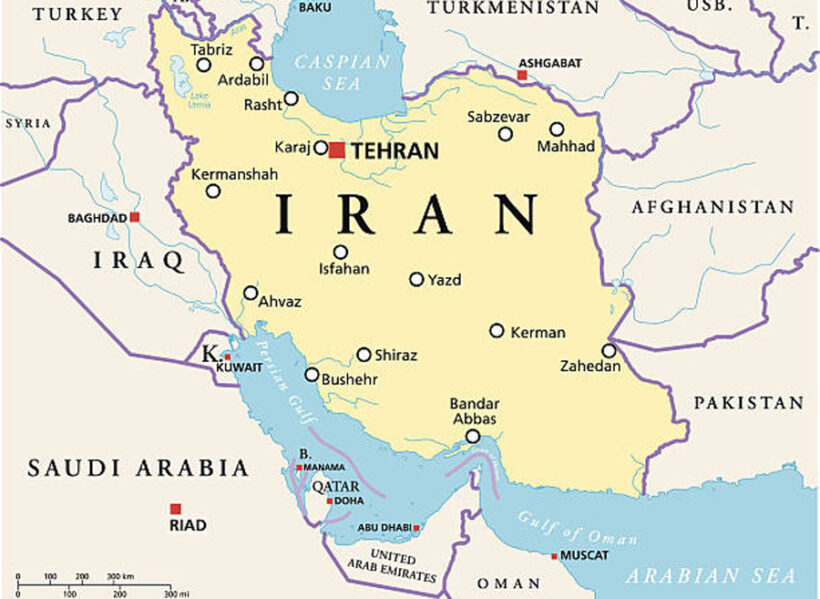
Look what they’ve done with the [Strait of Hormuz] – great example. The strait is basically the equivalent of an economic nuclear weapon that they’re trying to use against the world, and they’re bragging about it. They’re putting up billboards in Tehran bragging about how they can hold 25 percent or 20 percent of the world’s energy hostage.
Imagine if those same people had access to a nuclear weapon. They would hold the whole region hostage. We wouldn’t be able to do anything about Hezbollah, we wouldn’t be able to do anything about Hamas, we wouldn’t be able to do anything about the Shia militias in Iraq, because they’d be sitting there with a nuclear weapon saying we are untouchable.
There’s no doubt in my mind that at some point in the future if this radical clerical regimes remain in charge in Iran, they will decide they want a nuclear weapon. And what they were trying to do, before the President took action, is to hide behind this conventional shield of drums and missiles and a large navy, hide behind that, an impenetrable conventional shield, so they can do whatever they wanted with their nuclear program. That fundamental issue still has to be confronted. That still remains the core issue here.
QUESTION: Do you believe the Iranians are serious about making a deal?
SECRETARY RUBIO: I think the Iranians are serious about getting themselves out of the mess that they’re in. They’re – all the problems Iran had – they had riots a few months ago and these were economic riots. All the riots and all the – I’m sorry – all the problems that Iran had before the start of this conflict are still in place and most of them are worse. Inflation is worse, they still have the drought going on, they still have trouble making payroll, their economy’s flattened, they face crippling economic sanctions around the world. All those problems are there and many of them are worse; and now, they have half the missiles, none of the factories, and no navy and no air force. All that’s been destroyed, so they’re worse off and weaker.
So yeah, I think they’re serious about figuring out how can they buy themselves more time. We can’t let them get away with it. They’re very good negotiators. They’re very experienced negotiators, and we have to ensure that any deal that is made, any agreement that is made, is one that definitively prevents them from sprinting towards a nuclear weapon at any point.
QUESTION: If there is no deal, what comes next?
SECRETARY RUBIO: Well, again, that’s the President’s decision to make. I would start out by reminding everybody that the level of sanctions on Iran are extraordinary, the pressure on Iran is extraordinary, and I think more can be brought to bear. But I hope that in the aftermath of this conflict the whole world’s eyes have been opened to the threat Iran poses. Again, they want to do with the world with a nuclear weapon what they are doing now with oil. They want to hold the world hostage so they can do whatever they want. That’s unacceptable.
Now, one of the things that has to happen is the international community, quote/unquote, as it likes to be called but it never does anything – the international community needs to come together and say what’s happening in Iran is a threat to global peace, a threat to global stability – not just a threat to the Gulf kingdoms, not just a threat to Israel, a threat to the world, and it has to be addressed comprehensively. I hope the rest of the world will join us in the crippling sanctions and other things that we are doing to pressure that regime into making concessions it does not want to make.
QUESTION: I know that regime change is not a goal of the Trump Administration, but do you see a scenario in which the actions of the United States and Israel lead to regime change in Iran?
SECRETARY RUBIO: Well, I think – look, regime change is something that has to happen from within. But changing the regime – I know it looks like a word play – is something that pressure can bring about. In essence, one thing is to change the people in charge or their ideology, but another thing is to modify or modulate their behavior. At the end of the day, even though they are radicals, there are still people in the Iranian system that every single day, behind every decision they make, they weigh the costs and they weigh the benefits. And we have to make sure that the costs of all the nefarious things they are doing outweigh the benefits of what they are doing. This is the reason why the blockade is in place. You can’t have them close the straits and say, “You have to pay us to use the straits, but the only country that can go through the straits unimpeded without paying anything is Iran.” The blockade is not a blockade against shipping. It’s a blockade against Iranian shipping, because they cannot be the sole beneficiaries of an illegal, unlawful, and unjustified system of tolling and control in the straits.
QUESTION: President Trump has indicated that if there is no agreement with Iran, Operation Epic Fury will resume and he will target bridges and power plants. He told me this in a phone interview about two weeks ago. I wanted to ask you about how the administration weighs targeting. How do you walk the line between targeting infrastructure in Iran that hurts the regime but doesn’t hurt the civilian population that you are trying to win over?
SECRETARY RUBIO: Well, the first thing is always intent. Our desire is not to hurt the people of Iran. We have no problem with the people of Iran. Frankly, we wish the voices of the people of Iran were heard as opposed to having 30-40,000 of them murdered in the streets, murdered inside of hospitals, executed on a routine basis. So we have no quarrel with the people of Iran. We feel bad for the people of Iran, who are also victims of that regime.
If you talk about what the regime uses to sustain itself, what it uses to sustain itself is its industrial capacity, its ability to generate energy, and to use roads and bridges for purposes of the military. And so our targets will always be things that support the regime directly. You can’t – obviously, there might be a road or a power – a plant or factory somewhere that also benefits the economy, but its primary role is to benefit the regime and its security apparatus. That’s what we always targeted, and that’s what we’re focused on. We’re not hitting hospitals or anything. We’re not hitting nurseries and day care centers. That’s not our goal. That’s never what we are targeting. We are targeting things that support the regime’s ability to export terrorism and to protect its nuclear program. …
Read the full transcript of the April 27 interview of Secretary of State Marco Rubio at state.gov.
Questions
FROM VIDEO #1:
1. What does Secretary Rubio see as the main roadblock to an agreement with the Iranian Government? Be specific.
FROM VIDEO #2:
2. How does Secretary Rubio explain why the U.S. would not accept a deal offered by Iran to open the Strait of Hormuz if it did not negotiate its nuclear program?
3. Does Secretary Rubio believe the Iranians are serious about making a deal?
4. Reporter Trey Yingst asks Secretary Rubio what comes next if there is no deal with Iran? What kind of an answer does Rubio give?
5. Yingst notes that President Trump has said if the regime does not come to an agreement to completely get rid of their nuclear program/materials, we will target bridges and power plants. What is Rubio’s answer to the question “How do you walk the line between targeting infrastructure in Iran that hurts the regime but doesn’t hurt the civilian population…?”
FROM THE VIDEO UNDER “RESOURCES” BELOW THE QUESTIONS:
6. In his assessment of where we’re at, Gen. Keane said the regime does not care about the suffering of their people or even the impact on their industry. He states firmly, “After weeks of trying to work with them, it is time to go back to full military operations.”
What do you think of Gen. Keane’s explanation of why this is the next step we should take?
Resources
General Jack Keane (Ret.): Iranians are never going to come to an agreement…they’re going to try to ride this out – April 27, 2026:
Daily “Answers” emails are provided for News Stories, Tuesday’s World Events and Friday’s News Quiz.