redo Jump to...
print Print...
(By Charles Fain Lehman, City Journal) – …The bill [to end the government shutdown], which President Donald Trump signed late Wednesday, contains another, perhaps more important fix: It reverses the accidental, forced legalization of marijuana nationwide.
That change comes with bipartisan support, backed by a 72-vote majority in the Senate and with the endorsement of 39 state attorneys general.
It’s a much-needed correction for the states that had “farm-bill legalization” unwillingly thrust on them — and for the many kids who were unwittingly harmed as a result.
How did we end up here?
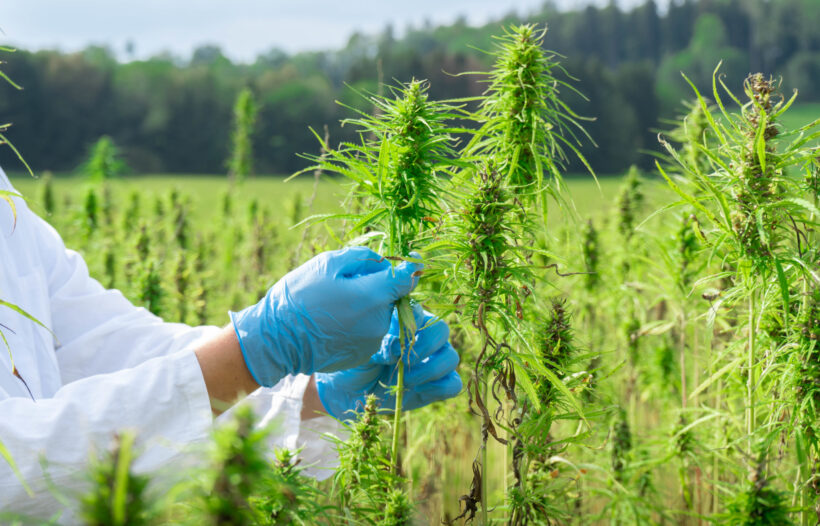
In 2018, Congress attempted to legalize the sale of hemp, a plant closely related to cannabis, in the Agriculture Improvement Act, the annual farm bill.
Hemp is primarily used for making rope, clothing and other non-drug products, but it contains chemical compounds that can be intoxicating.
To keep businesses from selling hemp that could get people high, the law allowed US farmers to grow hemp plants containing less than 0.3% delta-9 tetrahydrocannabinol — the most common form of THC, the psychoactive component in pot.
That, they hoped, would permit production of normal hemp, while keeping THC and plants containing it federally illegal.
But by defining hemp so narrowly, the legislators set off a chaotic cannabis explosion.
Some hemp strains contain other “isomers” of THC that are chemically distinct from delta-9 but have exactly the same effect.
Soon pot shops began popping up nationwide, selling “delta-8” or “delta-10” weed that, they claimed, was “farm-bill legal.”
Some even began selling marijuana outright, labeling it as “THC-a hemp” — taking advantage of a technical loophole in how states interpreted the law.
Farm-bill-legal weed took off. By 2023, this market was worth nearly $3 billion.
The unexpected federal legalization left states powerless to stop the spread of these products, and even those where pot is still illegal — a majority — were suddenly overrun with weed shops.
Farm-bill legalization has led to “the rapid growth of an underregulated industry that threatens public health and safety and undermines law enforcement nationwide,” the state attorneys general wrote.
The biggest victims were, as always, kids:
- The rate of poison-control center reports citing delta-8 products increased by 89% between 2021 and 2022, one study found — and children accounted for 30% of those cases, with the most common age being just two years old.
- Nearly 40% of all the cases “experienced a serious medical outcome,” including 5% admitted to a “critical care unit.”
- In Indiana, where pot is illegal, exposures to THC products rose 46% among children under age 5 between 2022 and 2024, while incidents among 6- to 12-year-olds rose 62%.
In short: The farm bill’s hemp rule was unintentional national pot legalization — imposing weed on states that didn’t want it, creating a totally unregulated industry and hurting kids in the process.
That’s why the new federal policy is so welcome.
Under the funding bill signed Wednesday, it is now illegal to grow hemp containing greater than 0.3% of any THC product — not just delta-9. [The bill prohibits the unregulated sale of “intoxicating hemp-based or hemp-derived products, including Delta-8, from being sold online, in gas stations, and corner stores, while preserving non-intoxicating CBD and industrial hemp products.”
That means no more delta-8, delta-10, or THC-a. The uncontrolled market is closed for business.
To be clear, this doesn’t mean the end of the hemp industry. As long as plants aren’t intoxicating, they’re still totally legal to grow. That includes plants containing cannabidiol, aka CBD, the non-psychoactive molecule in pot that has become a widely used supplement.
High-CBD hemp is still legal, and products derived from it are not prohibited. Nonetheless, the legal pot industry is throwing a temper tantrum.
The Hemp Industry and Farmers of America, its main lobbying organization, howled that the measure is a “draconian hemp ban” that will “open up dangerous black markets” — even though the law still allows the hemp and CBD industries to thrive.
Tom Angell of the pro-legalization mouthpiece Marijuana Moment jeered that the president is now “Trump the Hemp Criminalizer (THC).”
But Trump made the right call for America’s kids.
That’s especially so because support for legalizing weed has seen a sharp drop for the first time in over a decade, according to recent Gallup polling.
The shift is driven by Republicans, a majority of whom now oppose legalization for only the second time since 2016, with support for legal weed declining among independents as well.
Red or blue, almost nobody liked the topsy-turvy regime that the 2018 law forced on our communities.
Good riddance — and good job to the president and Congress for getting it done.
Charles Fain Lehman is a fellow at the Manhattan Institute and senior editor of “City Journal.” This article published at NY Post on Nov. 13, 2025. Reprinted here for educational purposes only. May not be reproduced on other websites without permission.
Questions
NOTE: Today’s article is an opinion piece.
1. In addition to reopening the government, what positive effect did the funding bill just signed by President Trump have?
2. a) What did Congress attempt to do in 2018?
b) What is hemp used for?
3. What was Congress’ aim in legalizing it?
4. How did the “farm bill legalization” backfire?
5. What were the unintended consequences of the 2018 farm bill? Be specific.
6. a) How has the new policy included in last week’s funding bill changed the law?
b) What does it still allow farmers to do?
7. Mr. Lehman notes that support for legalizing marijuana “has seen a sharp drop for the first time in over a decade, according to recent Gallup polling.”
Why do you think this is so?
Background
NOTE: The federal legislation just passed by Congress and signed by President Trump redefines hemp to ban products with a total THC concentration greater than 0.3% (including Delta-8 and other isomers) or more than 0.4 milligrams of total THC per container. This effectively outlaws nearly all the hemp-derived THC products currently available in general commerce.
- Businesses heavily reliant on the sale of these products could face closure.
- Industry executives estimate the change could wipe out 95% of the national hemp retail market, threatening jobs and businesses in states with large hemp sectors.
- Proponents of the ban, including some in the regulated cannabis industry, argue that the move will shift all intoxicating THC product sales into regulated channels, ensuring better consumer safety measures like age-gating and product testing.
The ban is not immediate; it has an effective date of November 12, 2026, giving the industry a one-year grace period to lobby for potential legislative corrections or adjust their business models. (from Google AI Overview, Nov. 17, 2025)
READ another commentary:
Cannabis poisoning among teens skyrockets since NY legalization (by Gabrielle Fahmy, Nov. 15, 2025, NYPost) — Teen pot use is exploding in New York after years of decline — just three years after the Empire State legalized marijuana in 2021, new statistics show.
Nearly one in five kids under 21 now report using cannabis, according to a New York Impact Report released Thursday by from Smart Approaches to Marijuana.
Marijuana poisoning cases have skyrocketed 56% among New Yorkers under 19, from 649 in 2021 to 1,104 cases in 2023, a 70% jump, according to data from the National Poison Data System cited in the report.
As many as 95% of the poisoning cases in teens involved edibles.
The grim numbers are in direct contrast to claims from legalization proponents that the move would make communities safer.
“We have a record number of young people using marijuana on a regular basis. We have record numbers of hospitalizations because of poisonings from these edibles. And our lawmakers don’t seem to have a plan,” slammed Kevin Sabet, President of Smart Approaches to Marijuana.
Sabet’s group is advocating for what it calls “common sense” measures, including warning labels, limiting the number of edibles and weed gummies sold, and more information about THC levels in products.
“The THC levels are off the charts. This is not your Woodstock weed; today’s marijuana is so much stronger than it ever has been. We learned how to genetically breed it to be so much stronger,” Sabet explained.
“We’ve become better farmers, essentially. And so, today’s marijuana is genetically altered to increase the THC levels to get you high.”
Legalizing pot hasn’t put the kibosh on unlicensed [marijuana shops], either. A legal loophole has enabled pot peddlers to stay in business, despite cops’ efforts, along with the state’s attempts to close the legal loophole.
The shocking report estimated the 2024 number at a staggering 3,000 [illegal shops], compared to just 275 legal [pot shops].
“Nothing’s being done to stop this,” slammed mom Kathleen Kelley, who lost her 17-year-old son, Nico, in 2023, after he took one hit from a potency-packed joint bought at an unlicensed city shop.
“We have these smoke shops all over the place where 17-year-olds, 15-year-old olds, who knows how old can walk in there and buy these things.”
Daily “Answers” emails are provided for Daily News Articles, Tuesday’s World Events and Friday’s News Quiz.