redo Jump to...
print Print...
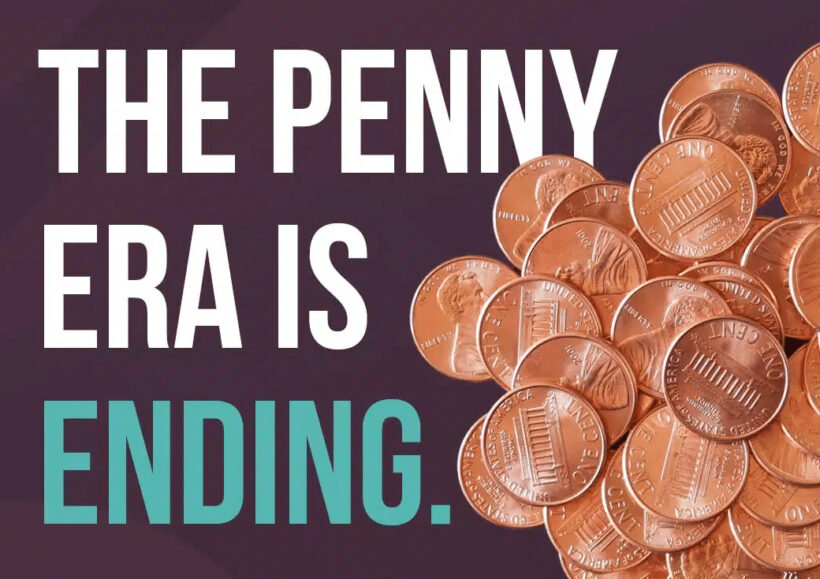
(By Andrea Shalal, TribLive) PHILADELPHIA — U.S. Treasury Secretary Scott Bessent and Treasurer Brandon Beach visit[ed] the Philadelphia Mint on Wednesday to oversee production of the final circulating one-cent coin or penny, each of which costs nearly 4 cents to produce, Treasury said.
President Donald Trump said in February he was ordering Treasury to halt what he called the “wasteful” minting of pennies, prompting gas stations, fast-food chains and big-box stores to adjust prices and round cash transactions.
Treasury said rising production costs and rapidly changing consumer habits and technology had made production of pennies “financially untenable” and unnecessary, noting that it now costs 3.69 cents to make each penny, up from 1.42 cents a decade ago.
Suspending their production is expected to save the U.S. Mint about $56 million a year, Treasury said. Pennies will remain legal tender, with an estimated 300 billion of them in circulation, “far exceeding the amount needed for commerce,” Treasury said.
The U.S. is joining other countries, including Canada, Australia, Ireland and New Zealand, in phasing out their lowest-value coins, rounding cash transactions up or down to the nearest five cents while keeping electronic payments exact.
The penny was first issued by the government in 1793. Since 1909, the profile of President Abraham Lincoln has adorned the obverse side of the coin made of zinc and copper.
In fiscal 2024, pennies accounted for 57% — or 3.2 billion — of the Mint’s total production of 5.61 billion circulating coins. The Mint will continue to produce collector versions of the penny in limited quantities, Treasury said.
Supporters of the penny have argued that it helps keep consumer prices lower and is a source of income to charities.
For many Americans, however, the coin has become a nuisance that ends up being discarded in drawers, jars and piggy banks. …..
[Going forward, retailers and gas stations will handle the elimination of the penny by rounding cash transactions to the nearest nickel, putting up signs to inform customers.The most likely outcome is that cash transactions will be rounded to the nearest 5 cents. Businesses will round up for totals ending in 3, 4, 8, or 9 cents and round down for those ending in 1, 2, 6, or 7 cents.
Retail groups are urging Congress and the Treasury Department to provide a clear, national standard for rounding cash transactions to create consistency and legal protection].
Published at Pennsylvania news TribLive on Nov 11. Reprinted here for educational purposes only. May not be reproduced on other websites without permission.
Questions
1. For what reasons is the U.S. Treasury ending production of the penny?
2. How much does it currently cost to make a penny?
3. How much will ending penny production save taxpayers?
4. How many pennies are still in circulation?
5. Name several other countries that are eliminating production of their lowest value coins.
6. When was the penny first issued? In what year was the profile of President Lincoln put on the front of the penny?
7. What percent of the Mint’s total coin production were pennies in 2024?
8. Pennies were originally made of copper. In what year did the Mint transition to making pennies with copper-plated zinc, with only a 2.5% copper coating? (This answer is not found in the article)
9. a) What phrase is on the back of the penny? What is the meaning and significance of this phrase? (This answer is not found in the article)
b) What phrase has been on the front of all US coins since 1938?
(This answer is not found in the article)
10. Do you use pennies when making purchases? Do you think ending production of the penny is a good idea? Explain your answers.
Background
Officially known as the cent, the first penny was struck in 1787 and had a sundial design that was dreamt up by Benjamin Franklin, one of the Founding Fathers.
The U.S. Mint took over penny production in 1793, a year after Congress passed the Coinage Act. [CBS notes: The U.S. Mint has been making pennies in Philadelphia since 1793. Today, there are billions of them in circulation, but they are rarely essential for financial transactions in the modern economy or the digital age].
Like its predecessor, this penny was also made of copper. But it was slightly bigger and came to be known as the “Flowing Hair” cent because it had a woman representing liberty on one side and 15 chain links on the other side.
It wasn’t until 1909 that the woman was replaced by President Abraham Lincoln in profile to mark what would have been his 100th birthday.
The Mint has said [the penny] will continue to be legal tender for as long as its around.
Did you know? — Penny candy made its debut in 1896.
The penny is used in several idioms:
Stingy people still “pinch pennies.”
An unexpected windfall is referred to as “pennies from heaven.”
And a fiscal planner who is “penny wise and pound foolish” should be avoided.
[When someone looks like they are thinking about something or are quiet, people say “a penny for your thoughts” to mean – what’s on your mind?](NBC News, Nov. 12, 2025)
Daily “Answers” emails are provided for Daily News Articles, Tuesday’s World Events and Friday’s News Quiz.