redo Jump to...
print Print...
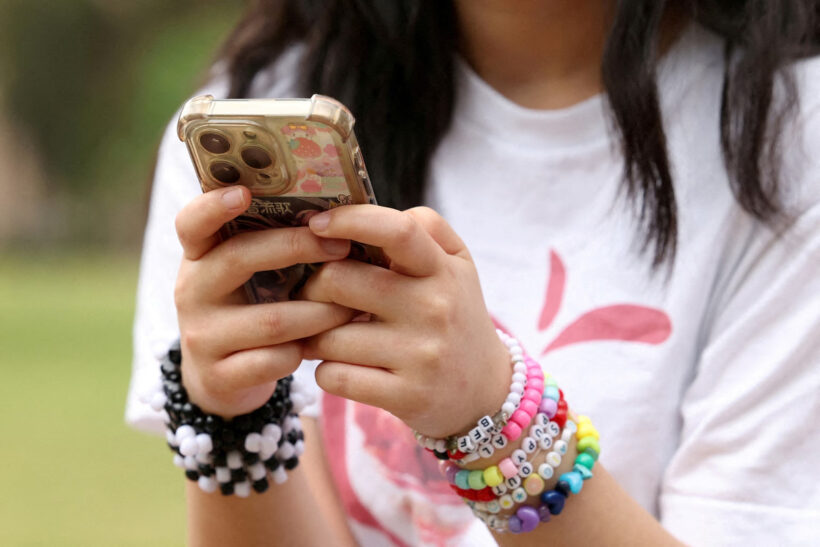
(by Mike Hauer, UPI) — Australian youth under age 16 are losing access to their social media accounts amid a national law that takes effect on Wednesday and is the world’s first such ban.
The nation’s lawmakers in 2024 enacted the social media ban that blocks access to 10 internationally popular social media sites — Facebook, Instagram, TikTok, X, Reddit, YouTube, Twitch, Kick, Snapchat and Threads.
[The law is designed to protect children from potential mental health risks, cyber-bullying, and inappropriate content].Others could be added if they add significantly more users or otherwise are deemed social media instead of gaming or peer-to-peer communication sites, such as Bluesky, Steam, YouTube Kids, WhatsApp and Steam.
The law punishes the respective social media companies with up to $32 million in fines instead of children who might access the sites or their parents, according to the BBC. [There are no penalties for users or parents, just huge fines for companies failing to comply].
The social media companies are required to ensure users are of legal age before accessing the respective sites by subjecting them to facial age assurance tests.
Officials at Elon Musk-owned X discussed with Australian officials the measures they would take to abide by Australia’s new law but have not shared that information with X users, Australian eSafety commissioner Julie Inman Grant told The Guardian.
The owners and operators of the nine other affected social media sites likewise confirmed they will abide by the new Australian law.
Officials for at least one other, Bluesky, have said they proactively will block access for Australians under age 16 despite it being deemed a “low risk” for children by the country’s eSafety commission due to its total user base of about 50,000 in Australia.
Australia-based k-ID service co-founder Kieran Donovan told The Guardian that the company has conducted hundreds of thousands of age verifications in recent weeks for Snapchat users and others.
The parent of one child suggested the age verification system is flawed and told The Guardian that her 15-year-old daughter is upset because “all of her 14- to 15-year-old friends have been ageverified as 18 by Snapchat,” but she wasn’t.
Another parent said his child will use a virtual private network and other tactics to bypass the age restrictions on social media.
Many free speech advocates say they support the effort to protect children but warned that the law could cause unintended harm.
Such harm might include making it harder to restrict harmful content or behaviors, creating security risks and inhibiting free speech and restricting minors’ access to information while restricting their speech.
Many also accuse the Australian government of saying it is better equipped to determine what is best for children than their parents by making it impossible for parents to choose whether or not to allow their children to access the banned social media sites.
Some Australian teens have filed a legal challenge to the new law.
While the Australian law takes effect on Wednesday, Malaysian officials have enacted a similar ban there that is scheduled to take effect in 2026.
Published at United Press International (UPI) on Dec. 9. Reprinted here for educational purposes only. May not be reproduced without permission.
Questions
1. The first paragraph of a news article should answer the questions who, what, where and when. List the who, what, where and when of this news item. (NOTE: The remainder of a news article provides details on the why and/or how.)
2. a) List the 10 social media sites that are included in the ban.
b) What is the purpose of the government’s prohibition for under 16 year olds?
3. Who will be held accountable if teens/kids under 16 use these social media sites?
4. a) What other online sites could under 16 year olds potentially be banned from using?
b) Why?
5. a) How will the government ensure that those under 16 do not access the 10 sites?
b) Do you think this will work? Explain your answer.
6. a) Why do the parents surveyed for this article suggest the ban won’t work?
b) What concerns do free speech advocates / opponents have about the law?
7. Do you think this law will be effective in the way the Australian government intends? Explain your answer.
Background
Age restrictions will apply to social media platforms that meet three specific conditions, unless the Australian government determines they should be excluded.
The conditions are:
- The sole purpose, or a significant purpose, of the service is to enable online social interaction between two or more users
- The service allows users to link to, or interact with, some or all of the other end-users
- The service allows users to post material on the service
Australia’s eSafety Commissioner Julie Inman Gran said the restrictions “aim to protect young Australians from pressures and risks that users can be exposed to while logged in to social media accounts”.
She added: “These come from design features that encourage them to spend more time on screens, while also serving up content that can harm their health and wellbeing.”
The law is designed to protect children from potential mental health risks, cyber-bullying, and inappropriate content.
Australia’s 2021 census showed there are roughly 2.5 million eight to 15-year-olds in the country, and the government has estimated that 86% of people in the age bracket use social media. (from a Dec. 9 Sky News report)
Daily “Answers” emails are provided for Daily News Articles, Tuesday’s World Events and Friday’s News Quiz.