
The miracle of D-Day
News Stories — Posted on June 1, 2026
The “Miracle of D-Day” refers to the astonishing success of Operation Overlord on June 6, 1944 on the beaches of Normandy, France. It was the largest amphibious invasion in history, bringing together over 150,000 Allied troops, 7,000 ships, and 11,000 aircraft to breach Hitler’s “Atlantic Wall” and liberate Western Europe from Nazi control.
General Dwight D. Eisenhower called the operation a crusade in which “we will accept nothing less than full victory.” The D-Day cost was high – more than 9,000 Allied Soldiers were killed or wounded — but more than 100,000 Soldiers began the march across Europe to defeat Hitler.
The ultimate triumph of D-Day relied on [multiple] factors:
1. Operation Fortitude (The Great Deception) – Before a single ship crossed the English Channel, the Allies successfully tricked the German High Command. Using fake units, phantom radio traffic, double agents, and inflatable tanks, they convinced Hitler that the real invasion would happen in Norway or the Pas-de-Calais region of France. This kept elite German armor divisions away from Normandy when it mattered most.
(The Ghost Army was a top-secret, 1,100-man U.S. Army unit comprised of artists, actors, and engineers. Arriving in Europe in mid-1944, they staged over 20 battlefield deceptions using inflatable tanks, sonic trucks, and fake radio broadcasts to draw enemy fire and save thousands of Allied lives.)
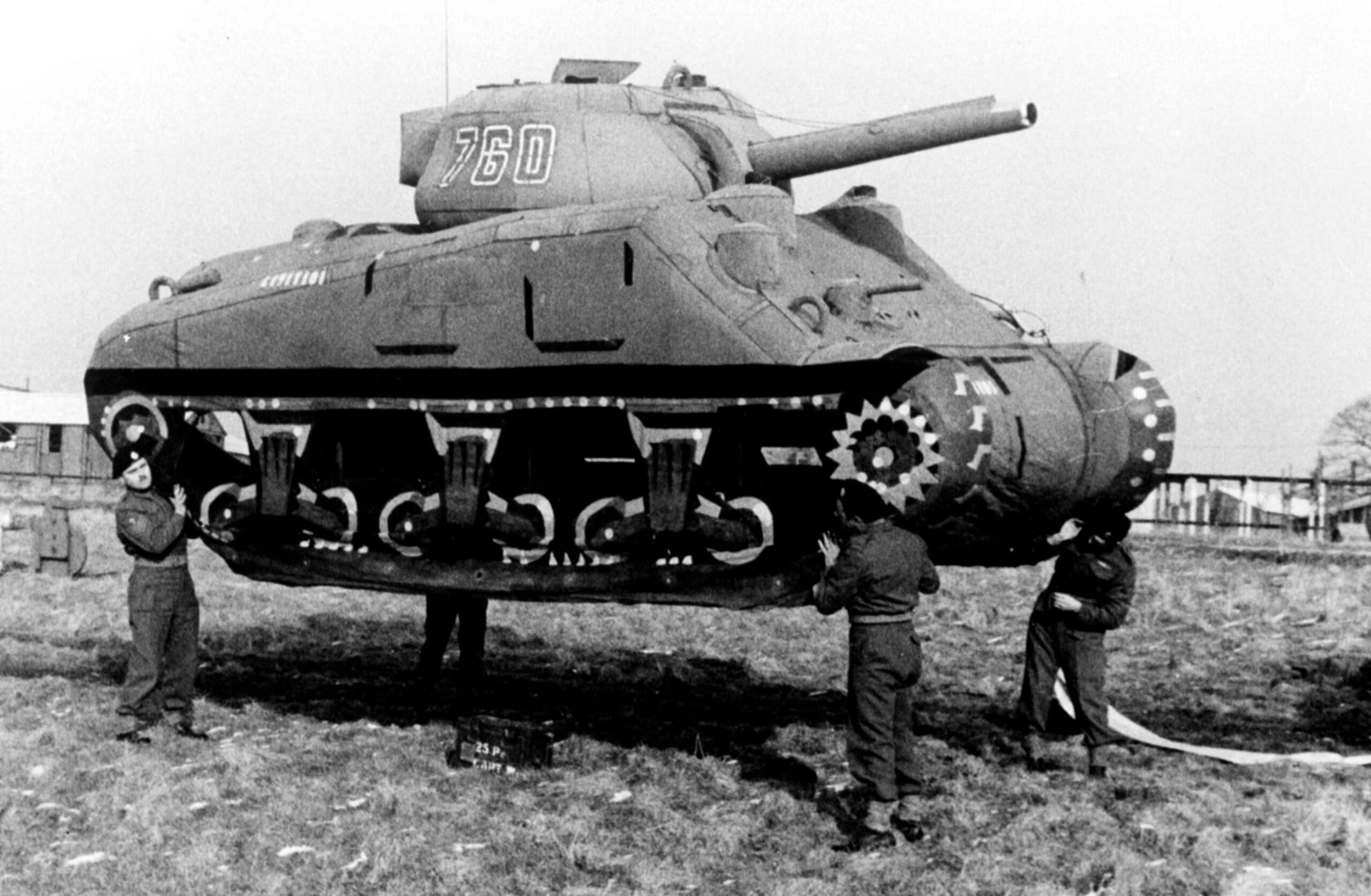
A rubber (and clearly light) decoy tank designed to deceive German forces in World War II, shown in England, circa 1939. (Roger Viollet/Getty Images)
2. The Five Beaches – On June 6, Allied forces targeted five distinct stretches of the Normandy, France coast:
- Utah and Omaha: The western beaches, assigned to American forces.
- Gold and Sword: British-assigned beaches in the east.
- Juno: Assigned to Canadian forces.
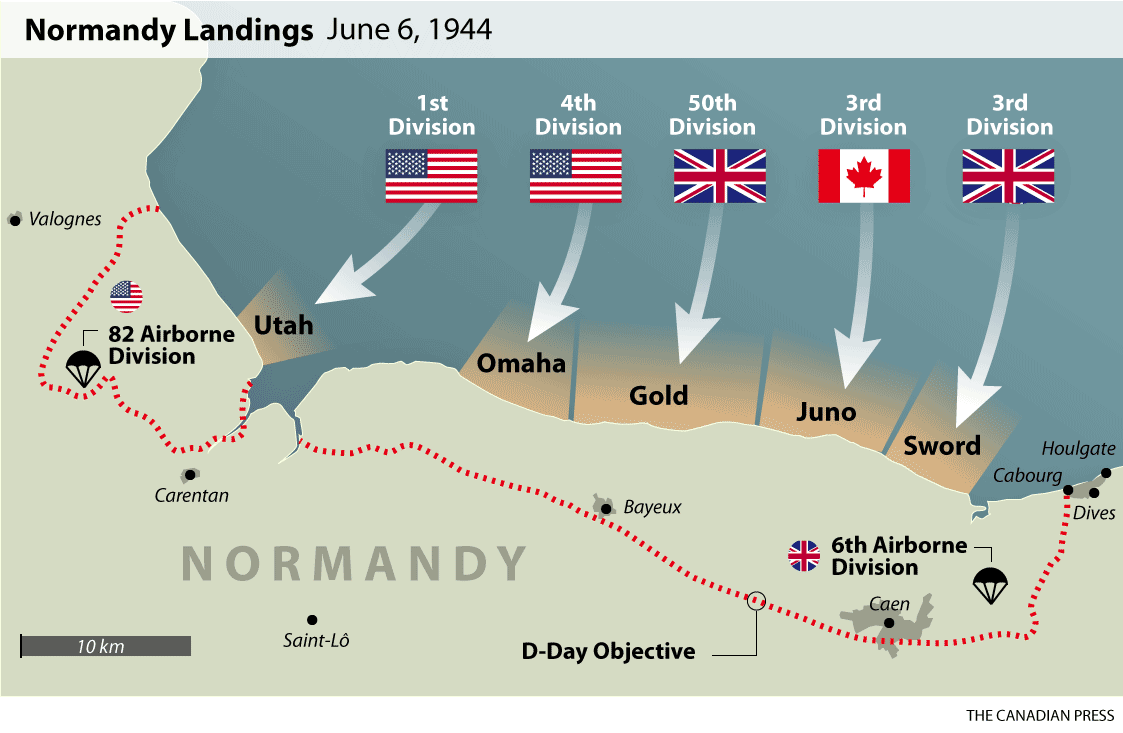
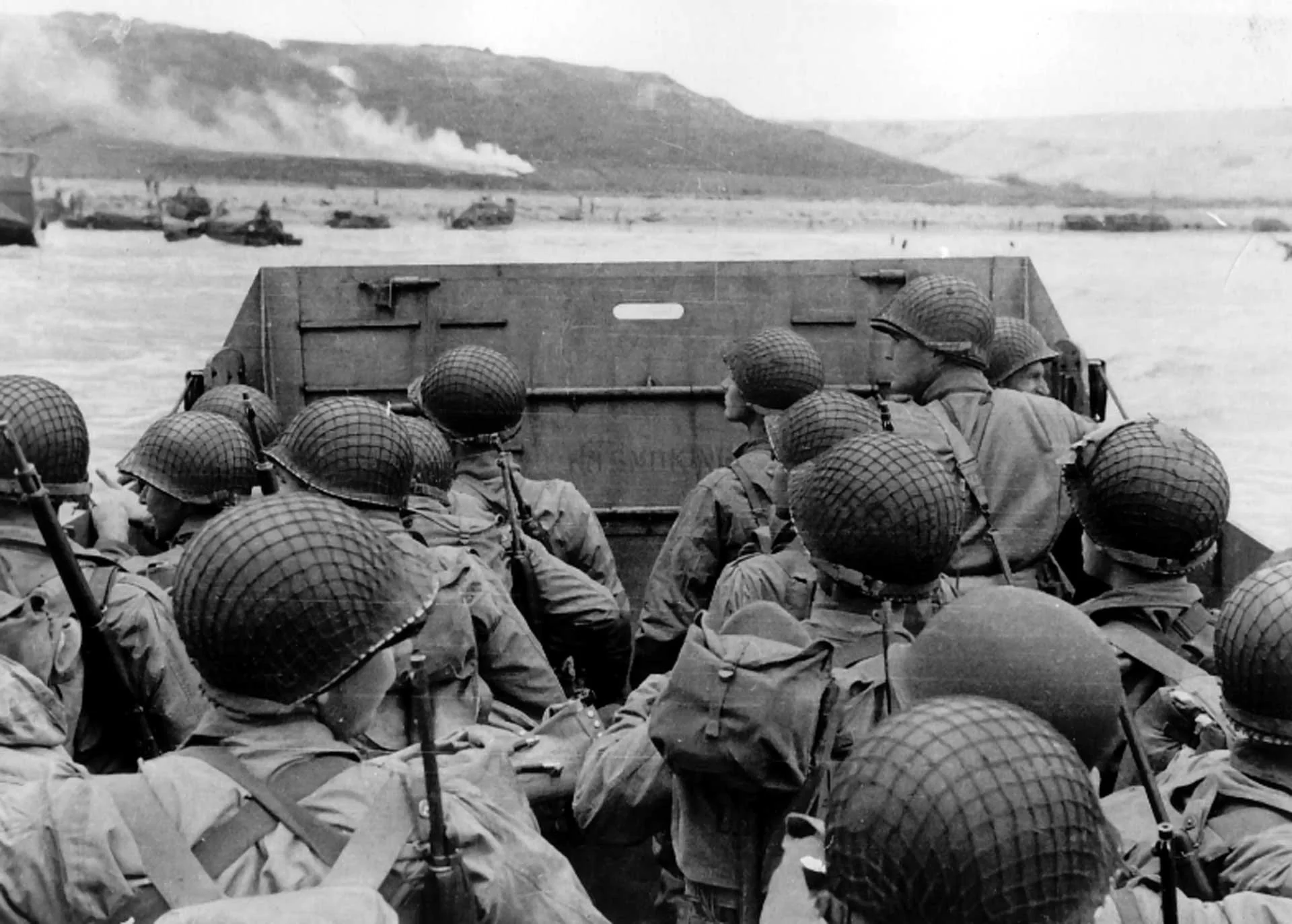
D-day landing.
3. Overcoming the Odds at Omaha Beach – Omaha Beach proved to be the bloodiest landing of the day. American troops faced high seas, heavily fortified 100-foot bluffs, and the elite German 352nd Infantry Division. The invasion nearly stalled, but the sheer tenacity and improvisation of small unit leaders allowed the troops to breach the seawall and scale the bluffs.
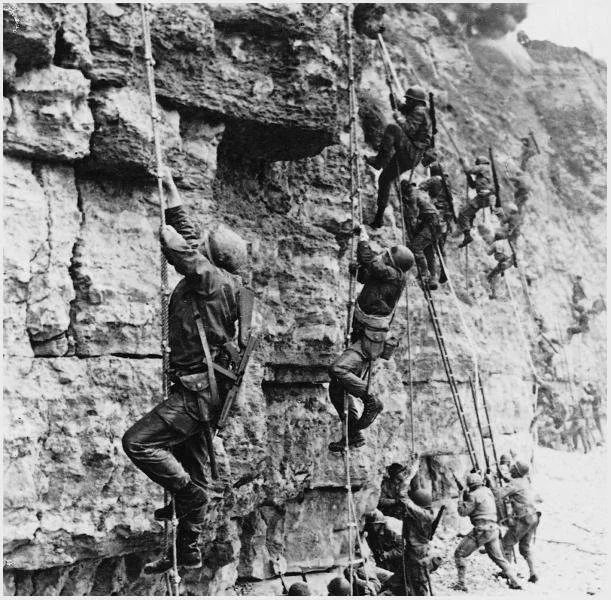
The 100-foot cliffs at Pointe du Hoc were scaled by the U.S. Army’s 2nd Ranger Battalion, commanded by Lieutenant Colonel James E. Rudder. The 225-man force faced intense German machine-gun fire and grenades while using ropes, grappling hooks, and rocket-fired ladders to scale the rugged, fortified terrain. Their mission was to destroy a vital battery of German long-range guns. Of the initial 225 Rangers who made the climb, only 90 remained capable of fighting when reinforcements finally reached them two days later.
4. Innovation and Logistics – Military planners anticipated needing deep-water ports, so they engineered entirely prefabricated, floating harbors called “Mulberry Harbors.” These were towed across the English Channel and assembled to ensure a steady, uninterrupted flow of hundreds of thousands of vehicles, men, and supplies.
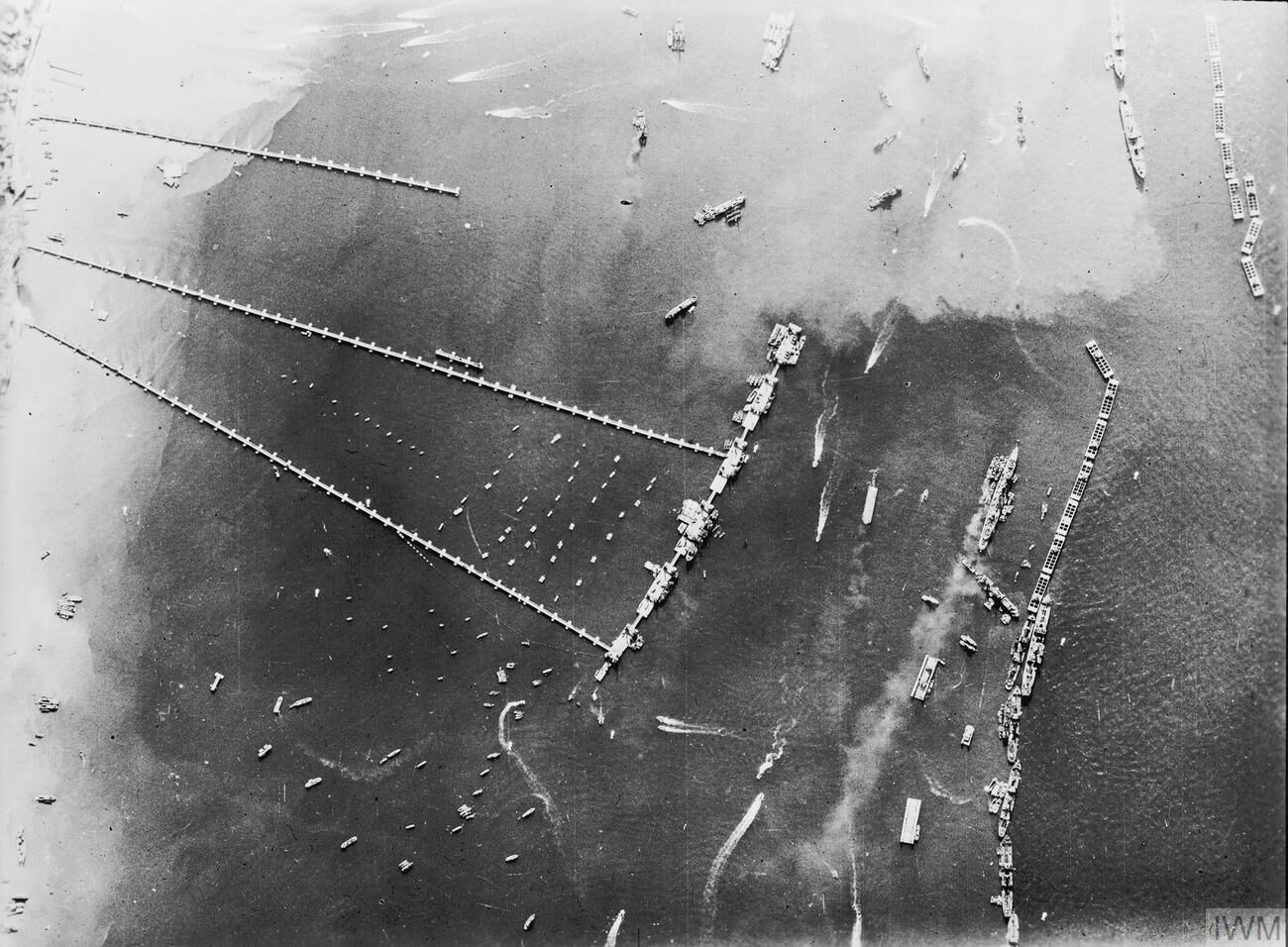
Aerial view of Mulberry harbour “B” (October 27, 1944)
5. Paratroopers in the Night – Prior to the amphibious landings, over 18,000 British and American paratroopers were dropped behind enemy lines under the cover of darkness. Their mission was to secure key bridges, destroy supply lines, and disrupt German communications, which prevented the Nazis from launching a rapid counterattack.
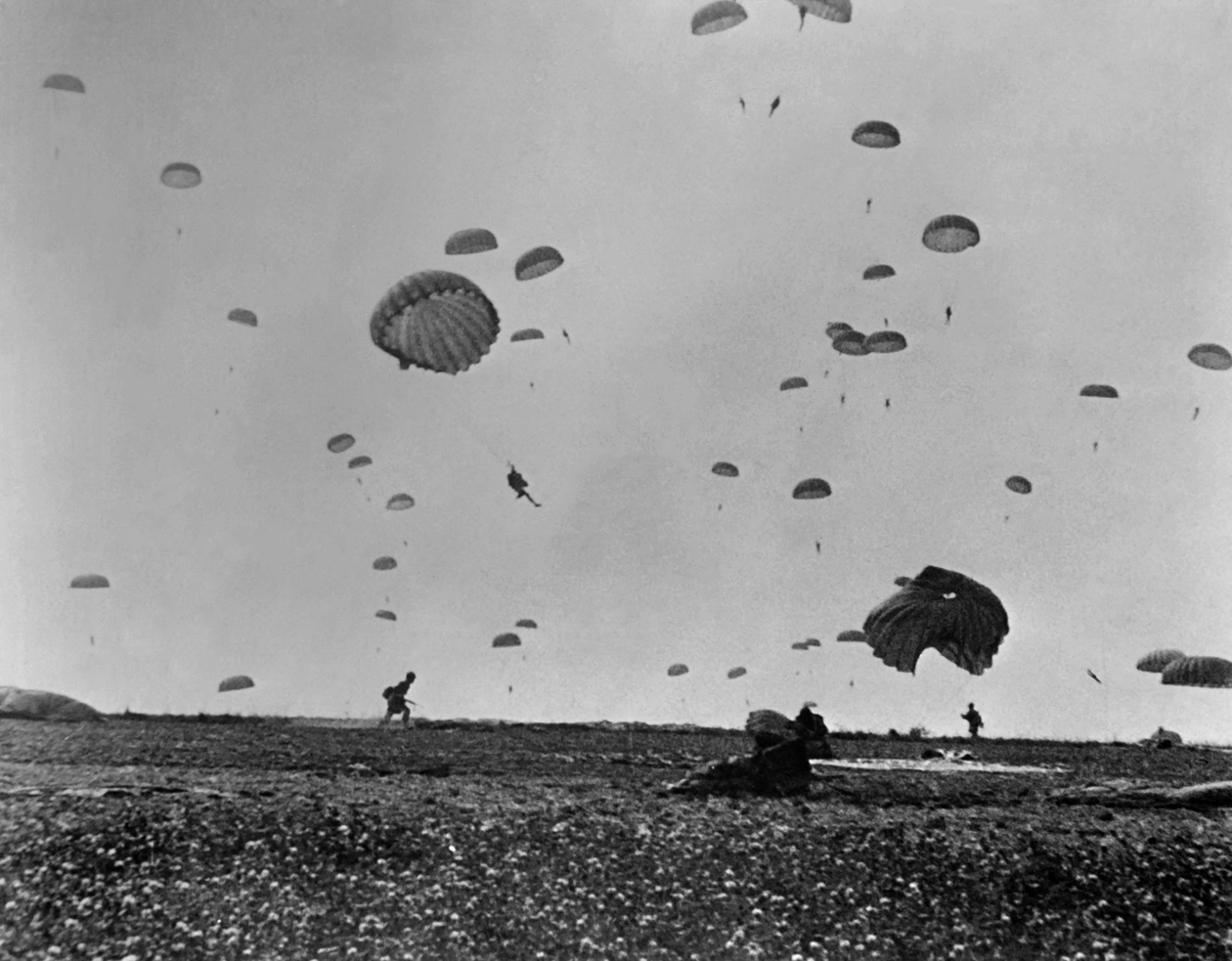
Allied paratroopers land on La Manche coast of France during the invasion. (U.S. National Archives via Getty Images)
(above partially adaped from Google AI search)
The Normandy airborne assault involved over 24,000 Allied paratroopers and glidermen dropping behind enemy lines shortly after midnight on June 6, 1944. Its goal was to secure vital bridges, block German reinforcements, and capture inland causeways to protect the flanks of the main beach landings.
13,000 paratroopers from the U.S. 82nd and 101st Airborne divisions along with British paratroopers — making for a total of about 24,000 combat jumpers landed in Nazi-occupied France.
The mission for the C-47s and gliders towed by the planes was to drop the soldiers behind the Germans’ main lines with the objective of taking the town of St. Mere Eglise in order to secure key approaches to the beaches.
Questions
1. For what reason were the allied paratroopers dropped into France the night before the amphibious assault began on D-Day?
2. How many U.S. paratroopers took part in Operation Overlord?
3. How many allied troops in total landed in Nazi-occupied France on D-Day?
4. What were the names of the 5 beaches Allied troops landed on? - Which were assigned to American troops? to the British? and to the Canadians?
Check out the links and watch the videos under “Resources” below the questions.
5. What 3 aspects of D-Day do you think every American should know? Explain your answer.
6. How does learning about D-Day inspire you?
7. D-Day is not part of required high school social studies curriculum in many states. Teaching about World War II varies from state to state. It’s often up to teachers to decide how much time they want to give to individual battles like D-Day. A teacher in North Carolina who spent about an hour and a half teaching about D-Day in 2019 said if it wasn’t the 75th anniversary of the turning point in World War II, she wouldn’t devote that much time to it. (Too many other requirements she needs to fulfill.)
a) Consider the importance to the U.S. and the world of the allies winning the war, and the role D-Day played in making it possible. Why should every high school require teaching about D-Day as part of their curriculum?
b) Ask a parent and also a grandparent the same question.
CHALLENGE: Research one of the following relating to D-Day. Write a 2-3 paragraph summary explaining its significance to someone who has never heard of it:
- Operation Overlord
- Operation Neptune
- Pointe du Hoc
- Bedford Boys
- Portsmouth, England
- Who planned the D-Day landings?
- Role of Eisenhower in D-day
- The Atlantic Wall
- Mulberry Harbors
- Ghost Army
- The use of C-47s and gliders
Background
For FAQs on D-Day, go to theddaystory.com.
Inflatable tanks? Read about how the allies fooled the Nazis with a "Ghost Army"
Why was Bedford, Virginia chosen as the location for the National D-Day Memorial in Bedford, Virginia? Go to: dday.org.
Read about the U.S. Army Rangers scaling the cliffs of Pointe du Hoc at armyhistory.org.
For a video of the Mulberry Harbors, go to d-dayrevisited.co.uk.