
Walmart to scrap synthetic food dyes, artificial ingredients from store brands
Daily News Article — Posted on October 6, 2025
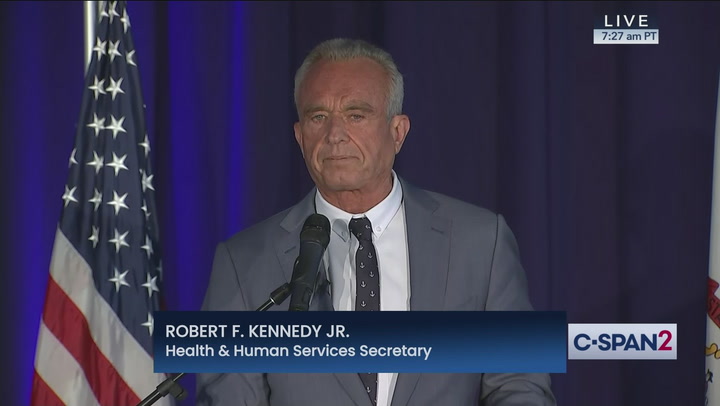
The Arkansas-based retailer is the latest to ditch artificial dyes amid HHS Secretary Robert F. Kennedy Jr.’s “Make America Healthy Again” push. … Walmart is the country’s biggest grocery chain.
Walmart’s Great Value, alone, is one of the largest consumer brands in the country – racking up billions of dollars in sales each year.
Walmart also plans to gradually eliminate about 30 other ingredients, including some artificial sweeteners and preservatives, from more than 1,000 products, according to a Wall Street Journal report.
The shift is likely to have a residual effect across the broader US food supply chain, from Walmart’s ingredient suppliers to other producers and retailers.
Products like sports drinks, cake frosting and cheese dip will see ingredient tweaks, and some changes have already come to shelves, Walmart said.
It’s looking to phase out ingredients like titanium dioxide, a food coloring, and azodicarbonamide, which is used to help bread rise evenly.
The retailer said it is working to keep prices in check despite the ingredient switch.
Walmart’s natural ingredients agenda comes after Secretary Kennedy in April led the Food and Drug Administration to announce a plan to phase out the use of FD&C artificial dyes, including red dye 40, yellow dye 5, yellow dye 6, blue dye 1, blue dye 2 and green dye 2.
Kennedy has cited studies that have found ties between FD&C food dyes and behavioral issues in [some] children.
The Food and Drug Administration has not established a causal link between the two.
Since June, [following RFK’s ultimatum] several food giants have announced plans to pull the dyes from their products – including Kraft Heinz, General Mills, Nestlé and Tyson Foods.
American shoppers have also grown more health-conscious, helping nudge companies to make ingredient changes.
For years, Walmart’s customer data has shown that more shoppers are looking for simple, natural ingredients, according to Scott Morris, senior vice president for food and private brands at Walmart US.
More than half of Walmart shoppers now flip over food packages to check the ingredients, he told the Journal.
“The customer is just getting louder and louder on this,” Morris said, adding that some changes in Walmart’s ingredients have been in the works for years.
But this process is not without its challenges.
Natural alternatives are often unable to replicate the same bright, punchy colors that come from artificial dyes.
Since natural dyes typically come from food sources, they can also give products a slight off-taste, experts previously told The Post.
These natural dyes are also more difficult to stabilize, causing challenges for manufacturers, and come with added costs.
And in some cases, shoppers don’t respond too enthusiastically to the new products.
General Mills, for example, found in 2016 that customers didn’t like a new Trix cereal made with all-natural ingredients, including dyes from radishes, purple carrots and turmeric. It quickly reintroduced red 40 and yellow 6 into the ingredients list.
During the product transition, Walmart has struggled to create bright colors in beverages naturally. It has considered using a clear liquid and colored packaging instead, according to the Journal.
Baked goods have also emerged as a challenge, since Walmart needs to find natural dyes that work for sprinkles, frosting and sometimes even the cake itself, according to the report.
Published atNY Post on Oct. 1, 2025. Reprinted here for educational purposes only. May not be reproduced on other websites without permission.
Questions
1. The first paragraph of a news article should answer the questions who, what, where and when. List the who, what, where and when of this article. (NOTE: The remainder of a news article provides details on the why and/or how.)
2. a) What other steps is Walmart planning on taking regarding artificial ingredients in their store brand products?
b) What products will be affected? - In what way?
3. What directive did HHS Secretary Kennedy issue to the FDA in April?
4. a) What studies did Secretary Kennedy cite in the reason for the elimination of food dyes?
b) Would you still prefer products using chemicals to color your food to make it look more appealing/vibrant if there is only a possibility that it may be harmful? Explain your answer.
5. What challenges are Walmart and other food companies facing with eliminating artificial food dyes?
6. a) What did General Mills do in 2016?
b) What alternative is Walmart considering to solve the problem of replacing dyes to give their beverages bright colors?
c) Would these changes one way or another affect your purchase of these food and beverage products and others? Explain your answer.
Background
U.S. foods often use synthetic food dyes, such as Yellow #5 and Red #40, which are sometimes banned or restricted in Europe, where a greater emphasis is placed on natural colors and mandatory warning labels for certain artificial dyes. For example, U.S. Mountain Dew uses Yellow #5, while the European version uses natural beta-carotene. However, a few synthetic colors are permitted in the EU but not the U.S., and the EU also permits natural colorings like aluminum, gold, and silver, which are not authorized in the U.S. (from Google AI Overview)
Red Dye 40 was approved by the FDA for use in food in 1971. The synthetic, petroleum-derived dye is now the most widely used food coloring in the United States. It was developed in 1971 by the Allied Chemical Corporation and first registered with the FDA that same year.
Red Dye 40 can cause issues such as DNA damage, gut inflammation, and negative effects on the gut microbiome, particularly in mice, according to studies. While research is ongoing, there are concerns it could worsen symptoms in children with ADHD or anxiety, and potentially play a role in inflammatory bowel disease (IBD). More research is needed to determine the long-term effects in humans. (Google AI from NIH, MD Anderson, et al)
Read "Are food dyes unhealthy?" from MDAnderson.