
Trump first elected leader in modern history to be hosted twice by a British monarch
Daily News Article — Posted on September 19, 2025
(by Paul Godfrey, UPI) – U.S. President Donald Trump landed in Britain Tuesday evening for an unprecedented second state visit to the United States’ closest ally as the guest of King Charles. The visit marks a significant moment in UK–US relations, reinforcing the enduring defense and economic partnership between the two nations. Britain rolled out the royal red carpet, which included 1,300 armed troops and a royal review of guards, all part of the largest military welcome for a state visit in British history.
Trump and first lady Melania Trump were met from Air Force One by Foreign Secretary Yvette Cooper, U.S. Ambassador to the U.K. Warren Stephens and Viscount Hood, King Charles’ lord-in-waiting, before being whisked off to Windsor Castle, reported the BBC.
Windsor Castle served as the Trump’s main base for a packed schedule of events. The visit got underway in earnest Wednesday morning when the Trumps were formally welcomed with a a 41-gun salute fired by The King’s Troop Royal Horse Artillery from the east lawn of Windsor Castle and the Honourable Artillery Company at the Tower of London 25 miles away, simultaneously. The salutes were part of an elaborate ceremonial welcome for the president.
The Trumps then rode a carriage through the estate in the company of the king, Queen Camilla, Prince William and Princess Catherine along a route lined with military personnel and music provided by the bands of the Royal Marines, army and Royal Air Force.
They were greeted by a honor guard on arrival at the castle before lunch in the state dining room, followed by a tour of the royal art collection. [The Massed Bands of the Grenadier, Coldstream, and Scots Guards performed both national anthems and music celebrating centuries of UK–US shared history].
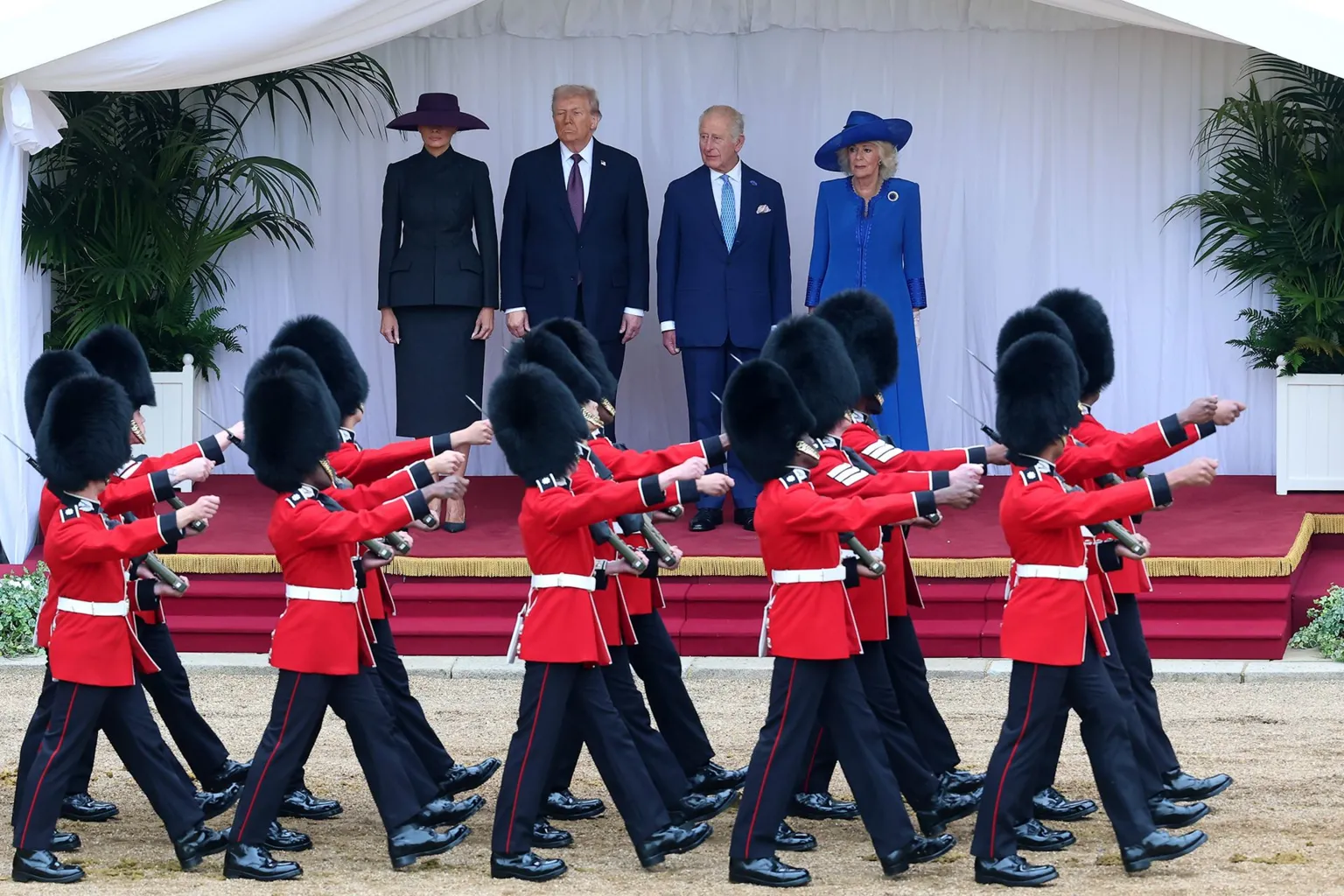
The American and British national anthems were performed by the Massed Band of the Grenadier Guards, Coldstream Guards and the Scots Guards
After lunch, the president and first lady laid a wreath on the tomb of Queen Elizabeth II in St. George’s Chapel, which is in the grounds of the castle, followed by a tour and a recital by the chapel choir.
Prime Minister Keir Starmer and his wife, Victoria Starmer, joined the group to view the “beating retreat,” a military ceremony involving the beating of drums and parading of Post Guards that dates back to the 17th century, followed by a fly past of the Red Arrows and U.S. and British F-35s.
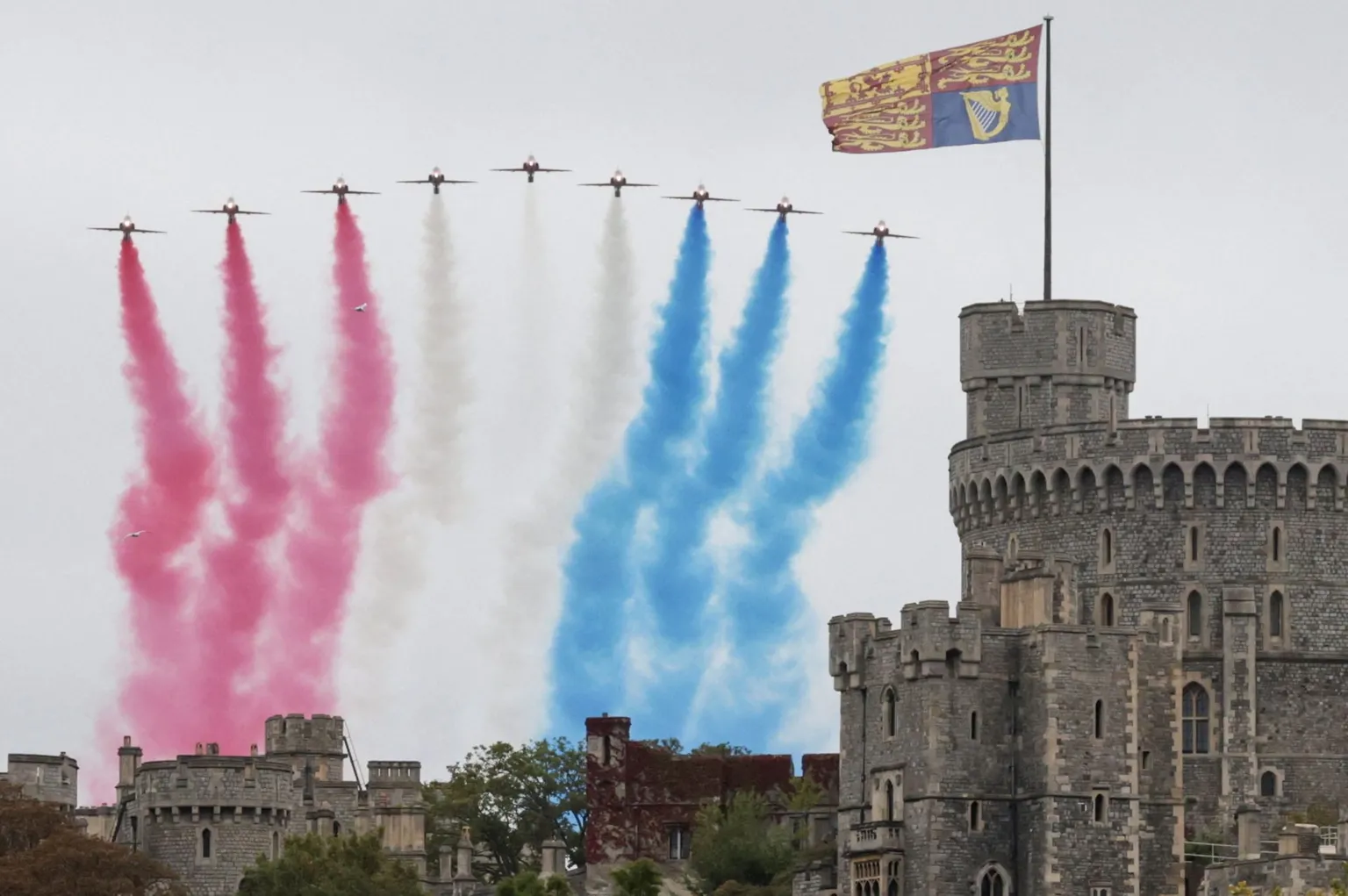
The red, blue and white smoke from the Red Arrows flypast filled the skies over Windsor Castle
The main event, the state banquet, took place Wednesday evening, a traditional white-tie event at which the king and the president both delivered speeches.
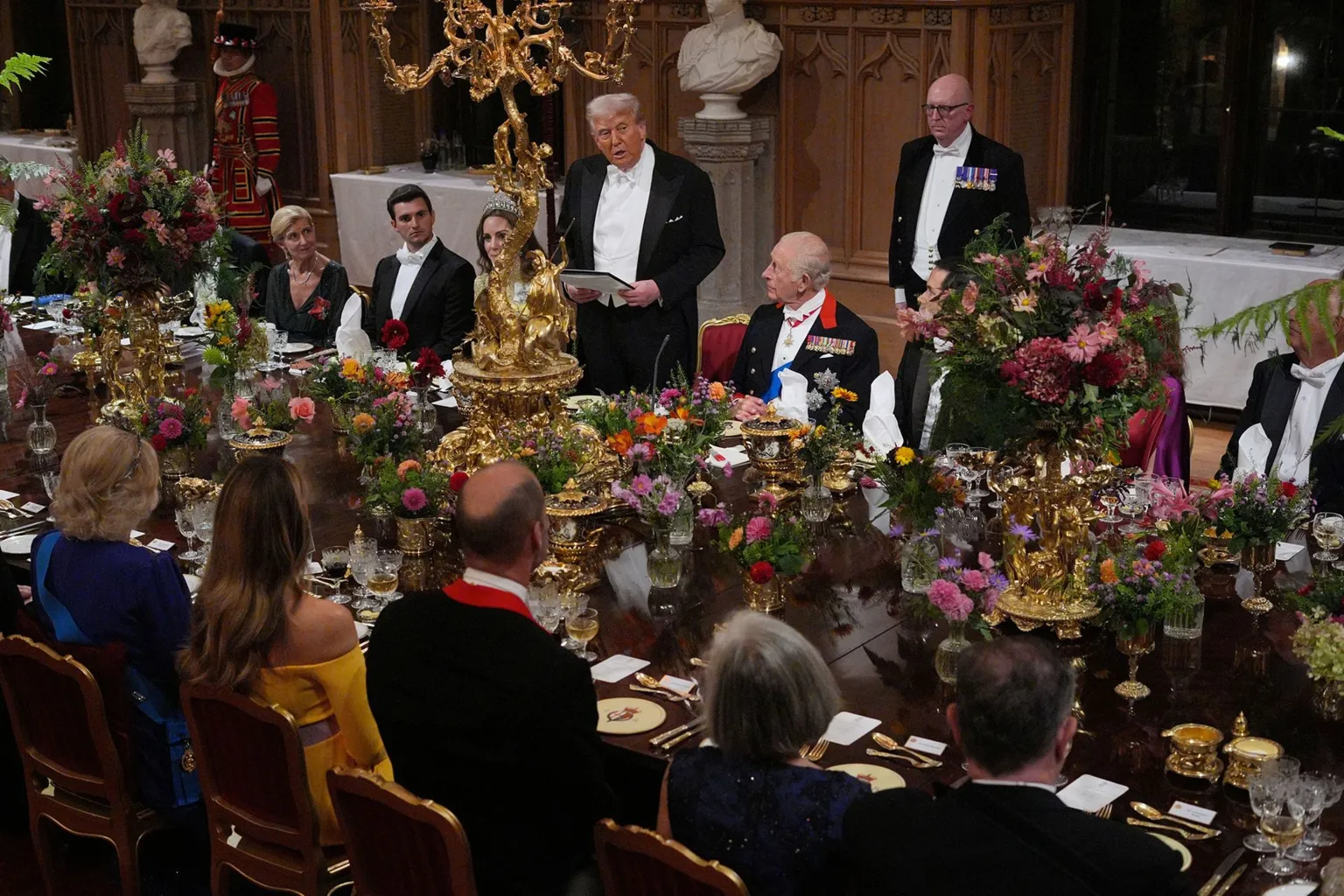
President Trump and King Charles both spoke at the banquet honoring the president.
Trump began the final day of his visit on Thursday by traveling to Chequers, Starmer’s country residence, 40 miles northwest of London.
The meeting was the business part of his visit, although there was still a full honor guard complete with bagpipers — a nod to Trump’s Scottish roots — when he was greeted by Starmer ahead of bilateral talks. Trump and Starmer are on opposite ends of politics and hold very different views on economic policies, etc.: the prime minister is the leader of Britain’s Labour Party, which is a democratic socialist party. He has publicly described himself as a socialist.
Afterward, the two leaders hosted a reception with executives from British and American companies, including GSK, Microsoft and Rolls-Royce, followed by lunch, before wrapping up their mini-summit with a news conference at which they announced deals on technology and financial services.
Investment in AI and super and quantum computing are the focus of the tech agreement called the “Technology Prosperity Deal with United Kingdom.”
While a second visit is unprecedented for a non-royal, it differed from Trump’s first visit in 2019…in that there were no public appearances or events.
The president did not address Parliament as the members are in a month-long recess for party conferences.
Security was tight across the three days the Trumps were on the ground, with British authorities expected to mount one of the largest ever operations for a visiting foreign leader with a price tag running into the tens of millions of dollars.
Published at United Press International (UPI) on September 16. Reprinted here for educational purposes only. May not be reproduced on other websites without permission.
Questions
1. What was significant about President Trump's state visit to England this week?
2. How did King Charles roll out the red carpet for President and Mrs. Trump? Be specific.
3. a) Who did President Trump meet with on Thursday?
b) What was the purpose of this meeting?
4. a) Read the "Background" and watch the videos under "Resources" below the questions. What is your reaction to the lavish ceremonies and banquet given for President Trump by the British monarchy - and for the president being the only world leader in the history of Britain to have been invited to two state visits to the United Kingdom?
b) Ask a parent to watch some of the videos and answer the same question.
Background
The Technology Prosperity Deal is a major agreement signed in September 2025 by the United States and United Kingdom to work closely together on technology, science, and energy projects, especially in artificial intelligence (AI), quantum computing, and civil nuclear energy.
Main Goals and Highlights
Huge Investment: U.S. tech companies, led by Microsoft and others, are investing up to $350 billion in the UK, promising to create thousands of new jobs in both countries and boost tech-related growth.
AI and Healthcare: The deal includes joint research to improve healthcare using advanced AI, such as developing new medical tools, better cancer and disease research, and sharing talent between the two countries’ top AI institutes.
Quantum Computing: The agreement focuses on building more powerful computers to speed up discoveries in defense, finance, and healthcare, and help both nations stay at the cutting edge of technology.
Civil Nuclear Energy: Both the U.S. and UK will work on new nuclear energy projects, including building 12 new reactors in the UK, aiming to provide cleaner energy and help meet rising power needs.
Jobs and Economic Growth: This deal should create about 15,000 jobs in the UK and 2,500 in the U.S., while also powering over a million homes with new clean energy sources, helping both economies grow.
Why It Matters
- This agreement is designed to make sure both countries stay leaders in modern technology, keep their economies strong, and help solve big challenges like affordable energy and better healthcare using science and innovation.
(from Perplexity AI)