
Internet service in Iran cut off or restricted as deadly protests reach a possible tipping point
Daily News Article — Posted on January 9, 2026
NOTE:
- From Tehran to provincial cities, crowds of defiant Iranians are pouring into public squares, chanting for freedom and an end to the iron-fisted rule that’s crushed dissent for decades.
- Videos shared online show waves of protesters flooding major roads and shouting slogans that strike at the heart of the Islamic Republic.
- The renewed unrest marks one of the biggest surges of anti-regime demonstrations in years, as everyday Iranians — students, workers and women leading the charge — risk arrest, beatings and worse to demand democratic reforms.
- The regime, true to form, has responded with force. (NY Post)
(by Tucker Reals, Haley Ott, CBS News) – Iranian authorities appeared to be cutting off internet access Thursday in the capital and some other regions of the country as mass protests and chanting against the government continue. Multiple sources in Tehran told CBS News the internet was down in the capital.
The NetBlocks monitoring organization said at about 8:30 local time in Iran that its live data “show #Iran is now in the midst of a nationwide internet blackout; the incident follows a series of escalating digital censorship measures targeting protests across the country and hinders the public’s right to communicate at a critical moment.”
One CBS News source in the capital said there were “huge crowds out across Tehran. Unprecedented,” and confirmed that the internet was down for most people in the city. He said some people, with more robust, more reliable business accounts could still get online. Not long after, that source became unreachable, suggesting the blackout had widened even further.
There were reports on social media, largely by anti-regime activists, that web service was also down or severely restricted in the cities of Esfahan, Lodegan, Abdanan, and parts of Shiraz.
The web outages came as Iranians began chanting out of their windows against the regime, following a call by exiled Iranian Crown Prince Reza Pahlavi, the son of the former U.S.-backed shah, to make their voices heard at 8 p.m. local time (noon Eastern). Analysts and insiders told CBS News the scale of the response to Pahalvi’s call could determine whether the deadly, 12-day-old protests fizzle out as previous rounds of unrest have, or grow into a major challenge to the government, and provoke a possible wider crackdown.
“All of the huge crowds in my neighborhood are pro-Pahlavi and from several areas my sources report the same — pro-Pahlavi crowds are prevailing, undeniably,” the source in Tehran told CBS News, calling it “monarchists responding to Reza.”
So far, the unrest has left at least 39 people dead, including at least four members of the security services, and seen more than 2,260 others detained, according to the U.S.-based Human Rights Activists News Agency.
President Trump told conservative radio host Hugh Hewitt Thursday that his administration is monitoring the protests in Iran. He threatened to take severe action if authorities kill protesters.
“I have let them know that if they start killing people, which they tend to do during their riots — they have lots of riots — if they do it, we are going to hit them very hard,” Mr. Trump said.
Speaking to reporters Thursday at the White House, Vice President JD Vance said the U.S. stands by anybody in Iran engaged in peaceful protest. Asked if the U.S. would take part in any Israeli strikes on Iran, Vance called on Iran to have real negotiations with the U.S. over their nuclear program.
“I’ll let the president speak to what we’re going to do in the future,” Vance said.
NetBlocks said earlier that its “data show the loss of connectivity on #Iran internet backbone provider TCI in the restive city of Kermanshah as protests spread across the nation in their 12th day; the incident comes amid rising casualties with indications of disruptions in multiple regions.”
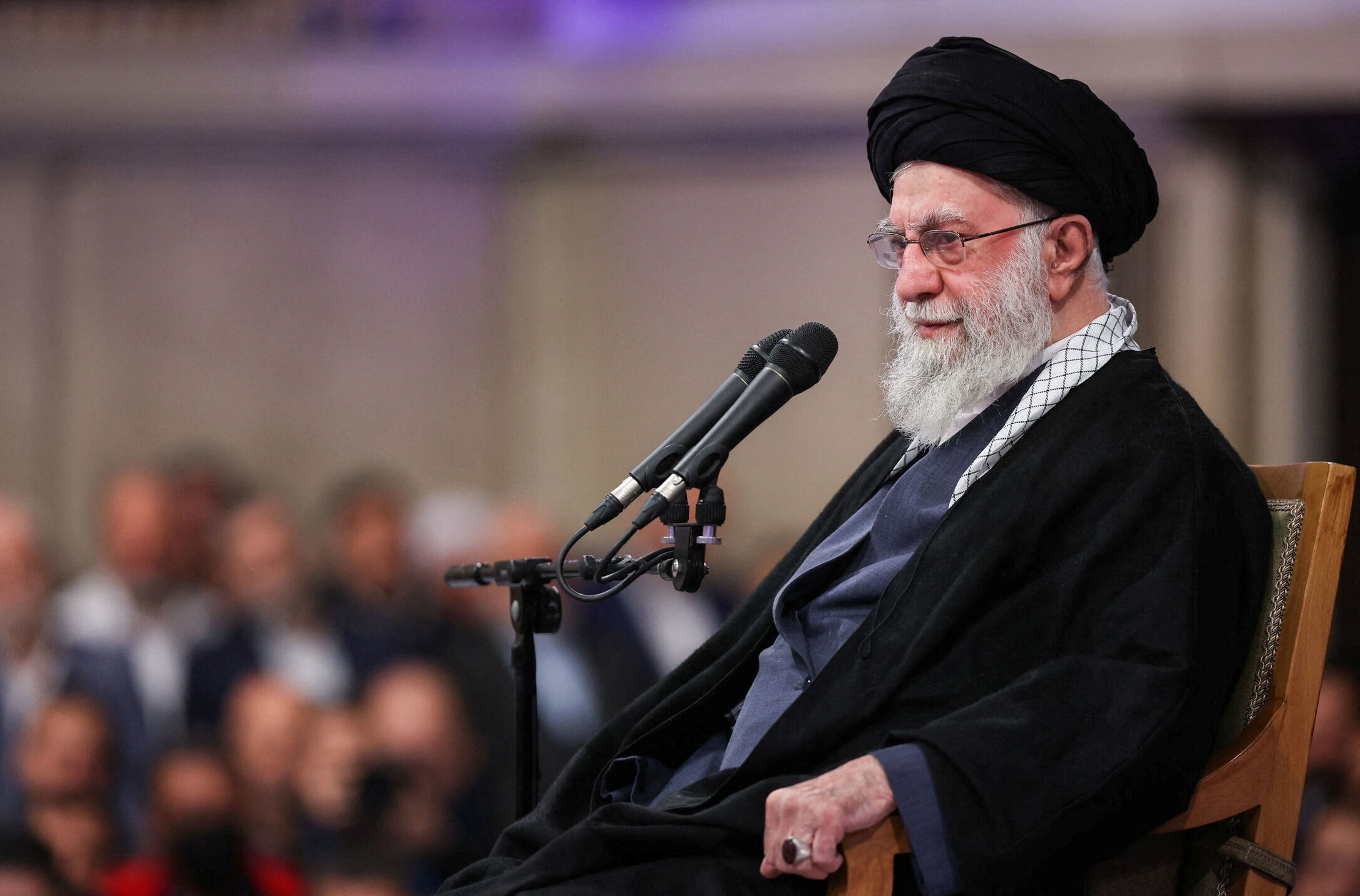
Iran’s Supreme Leader Ayatollah Ali Khamenei speaks during a meeting in Tehran, Iran January 3, 2026. Office of the Iranian Supreme Leader/WANA (West Asia News Agency)/Handout via REUTERS
Iranian authorities regularly restrict or disable internet access when they expect significant protests or other potentially destabilizing events.
Iran’s President Mahsoud Pezeshkian, seen as a “reformer” but subordinate to Iran’s longtime Supreme Leader Ayatollah Ali Khamenei, intimated ahead of his election in 2024 that he would free up the internet and make more websites accessible. [He didn’t]. It remains tightly restricted. Social media sites such as TikTok, Facebook and X are officially banned, as is access to U.S. and European news sites, including CBS News.
Many young, tech-savvy Iranians have become adept at getting around the restrictions, but it’s a cumbersome process, and when the regime slows down internet speeds at politically sensitive times, the whole system can become unusable.
Published at CVS on Jan. 8. Reprinted here for educational purposes only. May not be reproduced on other websites without permission.
Questions
NOTE TO STUDENTS: Read the “Background” below the questions and watch the videos under “Resources.”
1. The first paragraph of a news article should answer the questions who, what, where and when. List the who, what, where and when of this news item. (NOTE: The remainder of a news article provides details on the why and/or how.)
2. a) What is digital censorship?
b) How does digital censorship harm the Iranian people protesting?
3. How did a source in Tehran describe to CBS the crowds who turned out to protest the regime?
4. Who is Reza Pahlavi?
5. What warning did President Trump give the regime in Iran?
6. a) What do Iranian authorities do every time they expect significant protests by the people?
b) What social media sites are banned in Iran?
Consider the following:
Before the current uprising that began in late December 2025, the last major wave of mass protests in Iran was the Mahsa Amini (Woman, Life, Freedom) movement, which took place from September 2022 through early 2023.
While the current 2026 protests were triggered by an economic collapse, the 2022 movement was sparked by the death of 22-year-old Mahsa Jina Amini in the custody of the regime's "Morality Police."
It was widely described as the most significant challenge to the Islamic Republic since its inception in 1979, reaching all 31 provinces and over 130 cities.
The regime's crackdown was brutal, with human rights groups reporting over 550 deaths (including nearly 70 minors) and roughly 20,000 arrests.
Although the street protests eventually subsided by the spring of 2023 due to mass executions and arrests, the movement fundamentally changed Iranian society. Many women continued to engage in "everyday resistance" by refusing to wear the mandatory hijab in public despite new surveillance laws.
The current protests are seen as a "merging" of the grievances from 2022 (civil liberties/women's rights) with the raw desperation of the working class (economic survival). Unlike 2022, which was driven by the youth and middle class, the January 2026 uprising includes the traditional "Bazaar" merchant class and oil sector workers, which historically signals a much deeper threat to the regime's stability. (Gemini, Jan. 8)
Prior to the recent protests, the primary mass protest in Iran was the 2009 Green Movement, after a disputed presidential election in which incumbent was declared the winner in a landslide, leading millions of Iranians to take to the streets with the slogan, "Where is my vote?"
President Obama’s initial response was cautious, which led to significant criticism from Iranian protesters in Tehran, who were recorded chanting, "Obama, Obama — either with us or with them!" in direct appeal for U.S. support. The mass protests eventually died out. Many were killed and thousands were imprisoned for demonstrating against the regime. In 2022, former President Obama admitted that his decision to stay relatively quiet in 2009 was a "mistake," stating that the U.S. should have "shined a spotlight" on the courage of the protesters.
Follow this story in the coming days.
Pray for the people of Iran.
Background
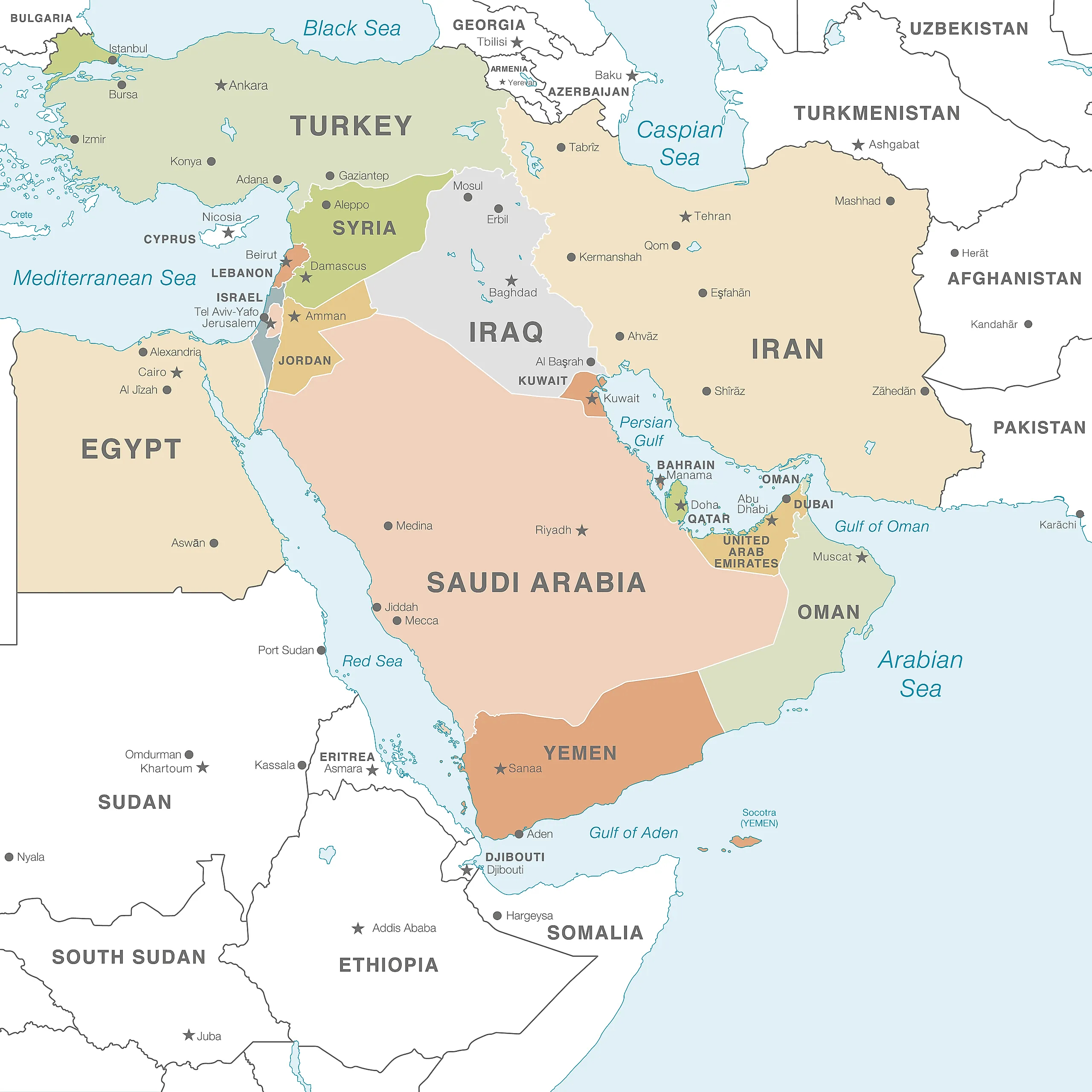
Protests in Iran: the people vs. the Supreme Leader and the government:
- The current wave of protests in Iran, which began on December 28, 2025, was initially triggered by a catastrophic economic collapse marked by a record-low currency value and inflation rates exceeding 50%.
- Sparked by a strike in Tehran’s Grand Bazaar, the movement quickly expanded beyond economic grievances to demand the wholesale removal of the Islamic Republic, fueled by long-standing anger over government corruption, social repression, and a foreign policy that prioritizes regional proxies (terrorist groups Hamas, Hezbollah, the Houthis in Yeman, and several others) over domestic welfare.
- As of January 8, 2026, the situation has reached a critical stage with demonstrations spread across all 31 provinces and at least 130 cities.
- The death toll has risen to at least 45 people killed by the regime, with over 2,200 arrests reported amid a violent crackdown by security forces.
- Despite widespread internet disruptions and warnings from Supreme Leader Ayatollah Ali Khamenei, the protests are intensifying, now featuring nationwide general strikes and symbolic acts of defiance like the defacing of government monuments.
Following the 1979 Iranian Revolution in which the Shah was overthrown, Iran became an Islamic Republic. An Islamic republic is the name given to several states that are officially ruled by Islamic laws (Sharia Law), including the Islamic Republics of Afghanistan, Iran, Pakistan, and Mauritania. (from wikipedia)
The following is from an Oct. 2016 article by Dr. Majid Rafizadeh, an Iranian-American political scientist published at Front Page Mag: The following are some of the rules for women which are derived from Iran’s Islamic constitution and moral police codes:
- Women are prohibited from showing strands of their hair on any side. Article 683 states: “Those women that appear in the streets and public places without the Islamic hijab, shall be sentenced from ten days to two months’ imprisonment or fined from fifty thousand to five hundred thousand Rials.”
- Women are not allowed to wear hats instead of veils to cover their hair.
- Iranian women are prohibited from riding bicycles. Iran’s Supreme Leader, Ayatollah Ali Khamenei, recently issued an Islamic fatwa regarding officially banning women from riding bicycles. He argued that “riding bicycles often attracts the attention of men and exposes the society to corruption, and thus contravenes women’s chastity, and it must be abandoned,” according to Iran’s state-run media.
- Women are not allowed to initiate divorce. Men have the right to do so.
- Iranian Muslim women cannot marry non-Muslim men. But Iranian Muslim men can marry non-Muslim women.
- According to Iran’s family code, women cannot travel abroad except with the permission of their custodian or natural guardian (husband, father, etc.). They also cannot obtain a passport without the consent of their husbands.
- Women are banned from receiving the same amount of inheritance as their male relatives. Even if a husband dies, the wife will receive only one-eighth of the inheritance if she has a child.
- Women are forbidden from having any physical contact with men, including shaking hands.
- Women are not allowed to have any kind of alcoholic drinks.
- Women are not allowed to dance.
- In many of Iran’s provinces, women are banned from performing music on stage.
- Women are prohibited from entering sport stadiums and watching men’s sports.
- In Iran, buses and subways are divided in two sections. The larger front section is for men, the smaller back section is for women. Women are prohibited from entering the men’s section even if there are no seats left in the back and there are plenty of empty seats in front of the bus.
(from Google Gemini AI, Jan. 8)