- President Trump arrived in Malaysia this weekend for a three-nation Asia tour, signing peace and trade deals Sunday with the leaders of Cambodia, Thailand and Malaysia, and rare earths and critical minerals supply chain cooperation agreements with Malaysia and Thailand. The deals are aimed at strengthening Trump’s position before meeting Chinese President Xi Jinping in South Korea on Thursday.
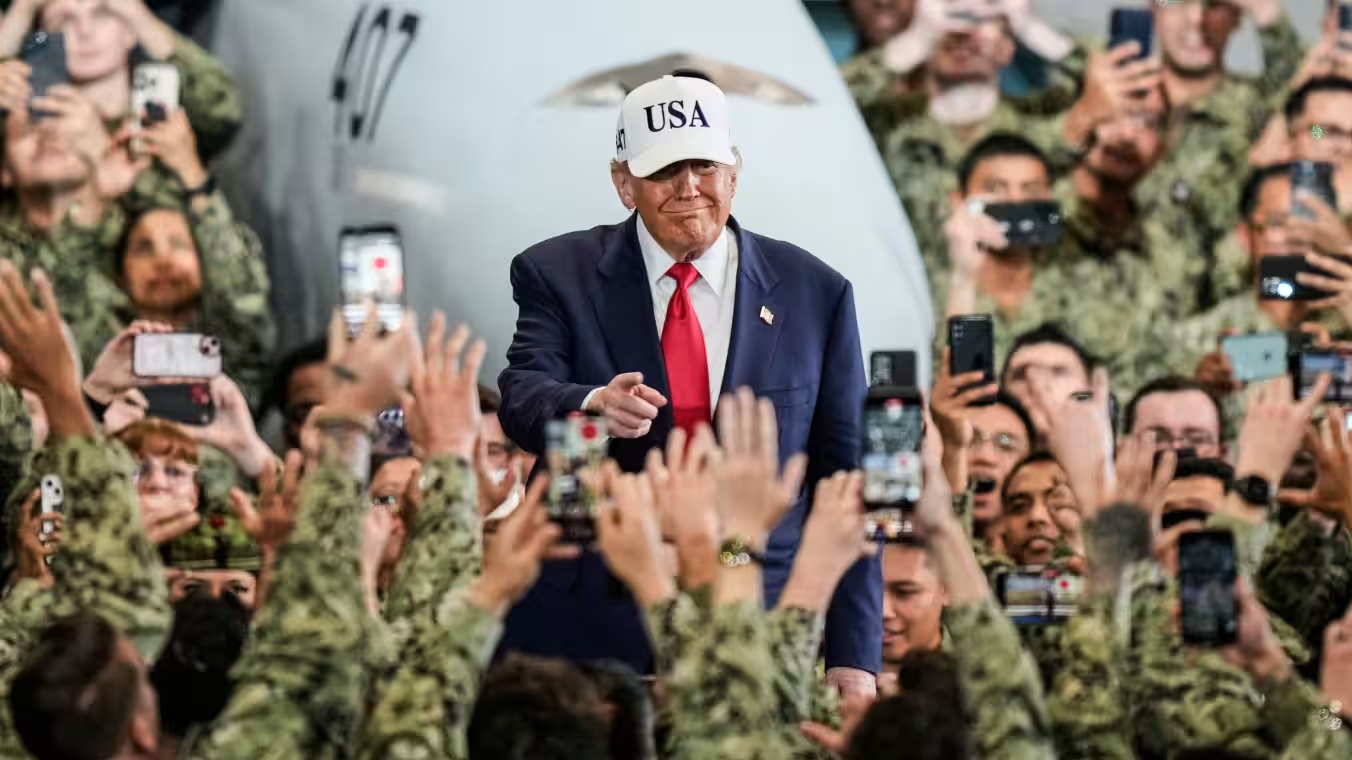
- The president then traveled to Japan, where he paid a courtesy call on Emperor Naruhito before meeting with newly elected conservative Prime Minister Sanae Takaichi, who is the country’s first female PM. After holding a bilateral meeting with the prime minister on trade, security and rare earth minerals, Trump addressed thousands of sailors stationed in Japan aboard the aircraft carrier USS George Washington.
- The president’s final stop on his Asia tour is South Korea for the Asia-Pacific Economic Cooperation (APEC) Summit and a meeting with Chinese President Xi there on Thursday. The two leaders are set to sign a trade agreement to avert Trump’s threatened 100% additional tariff on Chinese goods. Officials from both countries, who have been working on the sidelines, have said that a trade deal between the U.S. and China is nearly complete. (CNBC with NY Post)
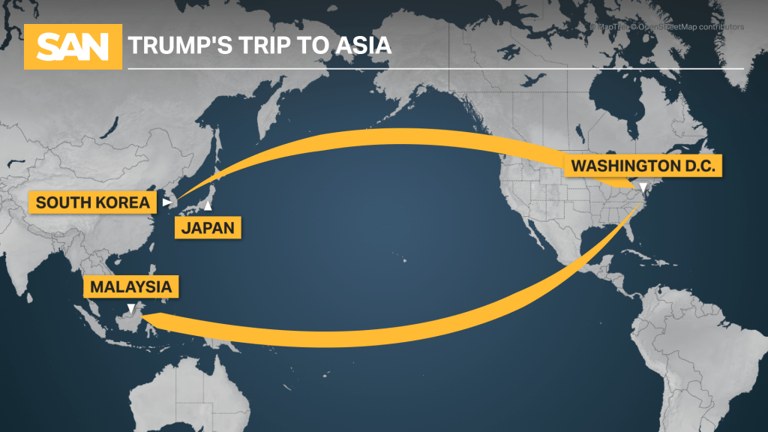
(by Anniek Bao, CNBC): During his first stop in Malaysia, Trump signed separate trade and mineral agreements with his Malaysian and Cambodian counterparts, as well as frameworks for trade pacts with Thailand and Vietnam.
The four countries, part of an 11-member regional bloc called the Association of Southeast Asian Nations (ASEAN), pledged to remove trade barriers, provide preferential market access to U.S. goods, and increase purchases of American agricultural, energy products, and aircraft.
They also agreed to cooperate with Washington on export controls, sanctions and access to critical rare earth minerals — commitments that appear to strengthen Trump’s standing in a region where Beijing has a growing clout.
In Japan, Trump met with Prime Minister Sanae Takaichi and the Emperor Naruhito before flying to South Korea, capping the trip with a meeting with the Asia-Pacific Economic Cooperation (APEC) Summit.
Under the agreements, Washington will keep a 19% tariff rate on most exports from Malaysia, Cambodia and Thailand, while some products will face no duties, according to joint statements from the White House.
Tariffs on Vietnam will remain at 20% with some goods eligible for duty-free access, according to the joint statement. Vietnam, which recorded a trade surplus of $123 billion with the U.S. last year, also pledged to step up purchases of American products to address the trade imbalance.
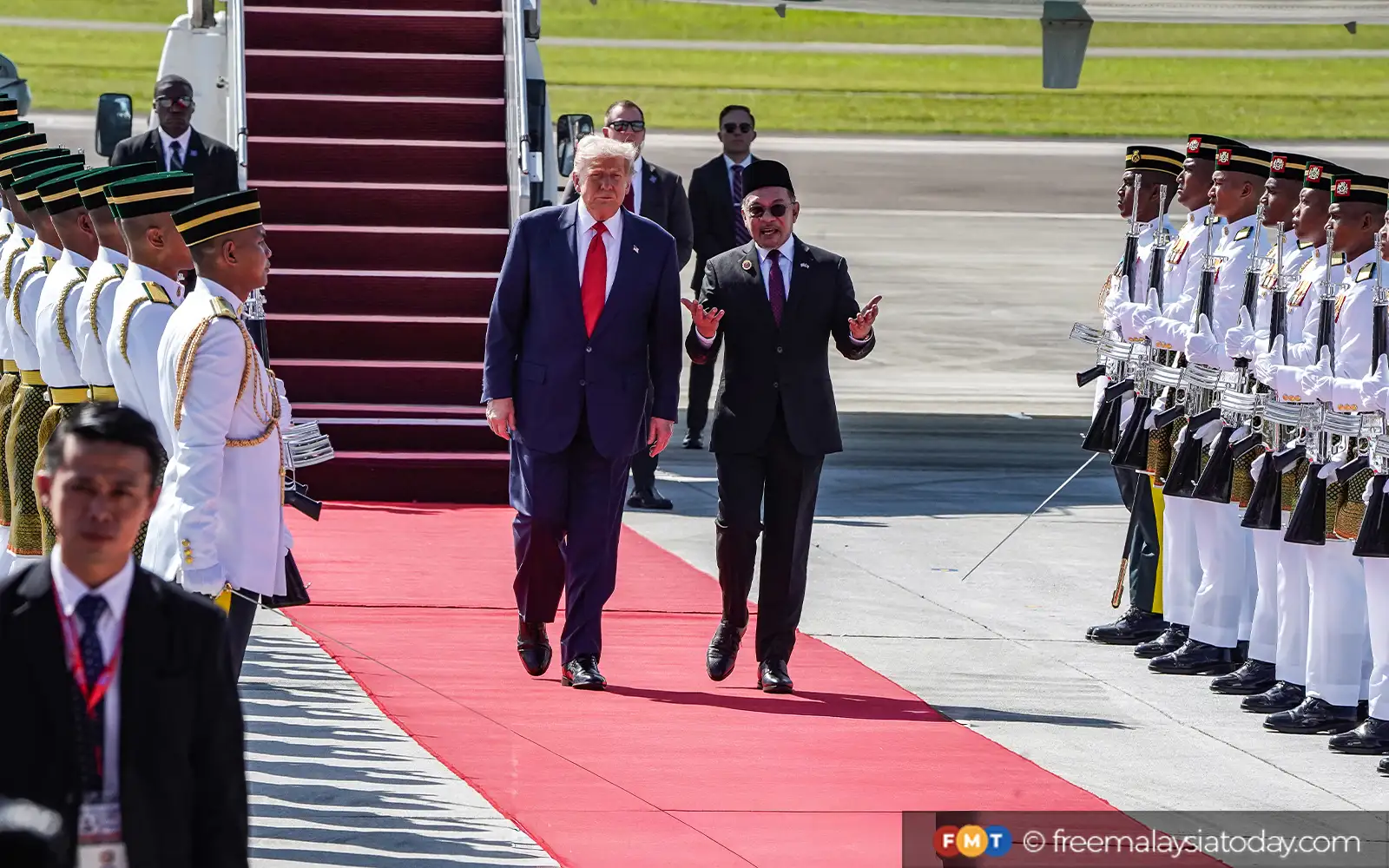
President Trump arrived on the morning of Sunday, Oct. 26, local time and was greeted by President Anwar bin Ibrahim and traditional dancers.
Malaysia agreed not to impose bans or quotas on U.S.-bound exports of critical rare earth minerals and to speed up development of its rare-earth projects needed by American companies.
The country, which sits on an estimated 16.1 million tons of rare earth deposits, has enforced a nationwide moratorium on the export of unprocessed rare earth materials since last year to develop its downstream industries and prevent resource exploitation.
Thailand will ease tariff barriers on U.S. goods by accepting some American-made vehicles, medical devices and pharmaceuticals, and by importing ethanol for fuel. It also pledged to relax foreign ownership restrictions for U.S. investors in the telecommunications sector.
Aside from trade agreements, Trump announced the formalization of an extended truce between Thailand and Cambodia, building on a ceasefire that he brokered in July following their violent border clashes this summer.
As Trump [met] with other leaders in Malaysia, U.S. and Chinese negotiators met on the sidelines of the ASEAN summit, where the bilateral talks yielded a framework ahead of an expected meeting between Trump and Xi in South Korea on Thursday.
In an interview with ABC News’ “This Week,” U.S. Treasury Secretary Scott Bessent said the negotiations produced a “substantial framework” that could ease concerns among American soybean farmers over China’s boycott.
China bought more than half of U.S. soybeans in 2023 and 2024, accounting for nearly $12.8 billion in 2024. But Beijing halted purchases earlier this year after Trump ignited a trade war.
Bessent also told ABC News that he expected China to delay its rare earth export controls, set to take effect in the coming weeks, by one year. Trump and Xi could also [finalize] a deal to allow TikTok to continue to operate in the U.S., Bessent added.
Excerpted from an article published at CNBC on Oct 27. Reprinted here for educational purposes only. May not be reproduced on other websites without permission.